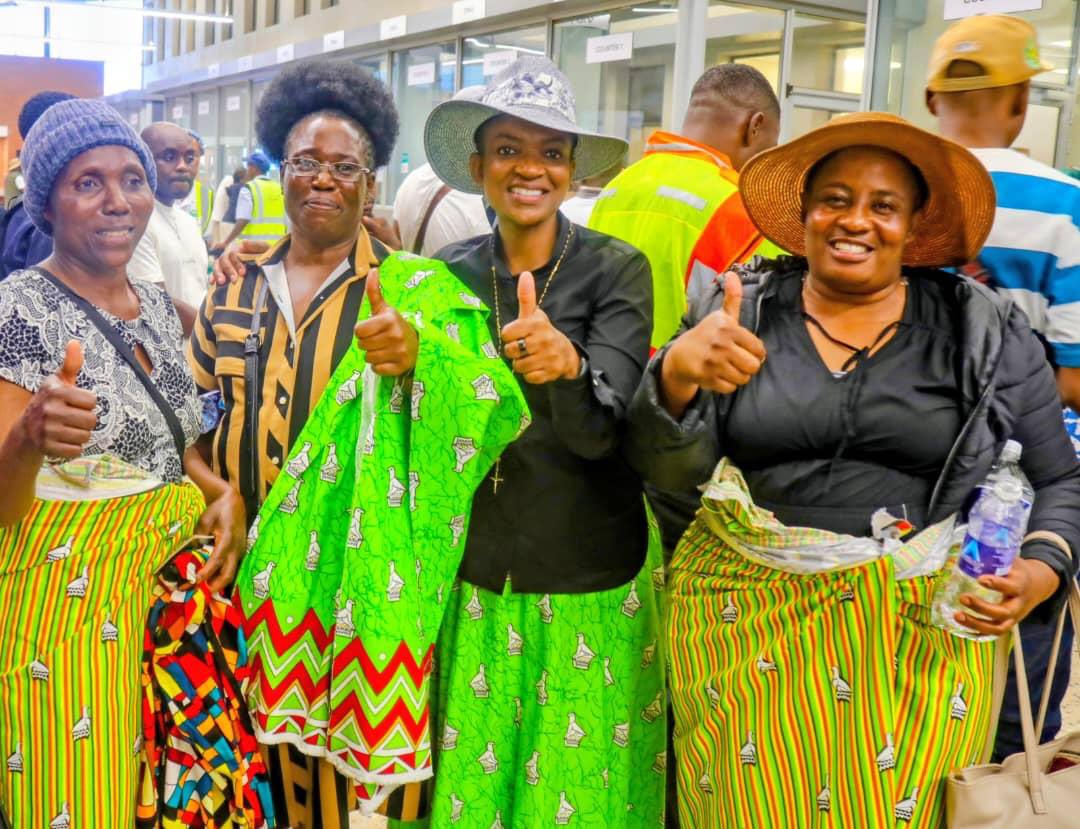
In the clay-red dust of Kwekwe, something extraordinary is happening around an open fire. Women pound mortar. The scent of popcorn drifts across community grounds.
The rhythmic grind of the guyo: Zimbabwe’s ancestral grinding stone: reverberates as it has for centuries.
But today, the world is watching. Under the passionate stewardship of Zimbabwe’s First Lady, Dr Auxillia Mnangagwa, the cookout competitions held in Kwekwe have become far more than a community celebration.
They are a deliberate act of nation-branding, an assertion of cultural sovereignty and a sophisticated tourism strategy positioning Zimbabwe as custodian of Africa’s most authentic culinary heritage.
This article examines the meaning and implications of these competitions, not merely as events, but as policy instruments that serve Zimbabwe’s tourism branding, economic development agenda, Vision 2030 aspirations, and National Development Strategy 2 (NDS2) pillars. Drawing on global analogies and emerging trends in food tourism and wellness travel, it argues that Dr Mnangagwa’s role as cultural authority and what may rightly be called Africa’s “Queen of Gastronomy” positions Zimbabwe for a remarkable economic and diplomatic dividend.
The Cookout Competitions: Cultural Reclamation as Statecraft
The Kwekwe Cookout Competitions, championed by Dr Auxillia Mnangagwa through the Angel of Hope Foundation, have systematically elevated dishes long dismissed as “village food” into expressions of national identity and wellness philosophy.
Foods such as haifiridzi, marula maheu, hand-ground sadza, dried mopane worms and popcorn are presented not as relics but as living, vital superfoods.
This framing is deliberate and economically consequential.
Traditional Foods Featured: Haifiridzi, Marula Maheu, Sadza reMapfunde, Mopane Worms, Hand-ground, Sadza, Guyo-milled Grains.
“These are not relics of poverty: they are prescriptions of wellness. Zimbabwe`s traditional kitchen is its pharmacy, its tourism product, and its diplomatic passport, all at once. Through institutionalising the competitions, Dr Mnangagwa has created what anthropologists call a “heritage performance”: a stage on which communities consciously enact and transmit culture. This generates tourism assets: authentic, non-replicable experiences that premium international travellers increasingly seek.
The First Lady’s authority as an advocate, recognised in her engagement with UN Tourism frameworks, gives these efforts international credibility that transforms local festivals into globally legible tourism products.
Tourism Branding: Zimbabwe’s Soft Power Cuisine
Global food tourism is one of the fastest-growing segments of the travel industry. According to the World Food Travel Association, over 93 percent of travellers cite food as a “significant” component of their journey. Nations that have leveraged this understanding- South Korea, Peru, Japan and Mexico- have realised extraordinary returns.
South Korea’s deliberate “Korean Wave” (Hallyu) strategy, encompassing K-dramas, K-pop and Hansik (Korean food culture), generates billions in tourism and export revenue. The viral sensation of Zimbabwean traditional song “Iva Gamba” performed by South Korean audiences is a striking signal: Zimbabwe’s cultural products already have global resonance.
The Cookout Competitions are the culinary arm of this same wave. Key Industry Indicators:
93 percent of travellers globally cite food as a key part of their travel experience
US$1.8 trillion: estimated value of the global food tourism market
40 percent of tourism expenditure is typically directed toward food and dining
Peru’s government invested in placing ceviche and causa on the world’s stage through chef diplomacy and gastronomy festivals: a strategy that made Lima one of the world’s top culinary destinations within a decade. Zimbabwe, through Dr Mnangagwa’s cookout vision, is pursuing an analogous but distinctly African path.
The guyo, the open fire, the communal pounding: these are not merely cooking methods; they are immersive experiences that no five-star hotel can manufacture. This authenticity is Zimbabwe’s competitive advantage.
Eat Your Medicine: The Wellness Tourism Overlap
Perhaps the most prescient dimension of Dr Mnangagwa’s culinary campaign is its alignment with the global wellness tourism boom, projected to exceed US$ 1.4 trillion by 2027. The narrative the First Lady has advanced- that Zimbabwe’s indigenous foods are medicinal, that the guyo produces physically active, community-bonded preparations and that marula and wild cucumber carry extraordinary nutritional profiles- speaks directly to the “eat your medicine” philosophy driving wellness tourists from Europe, North America, and East Asia. This is no longer a niche. It is the mainstream of luxury travel.
Japan’s shokuiku (food education) philosophy and the Mediterranean diet’s UNESCO inscription demonstrate that food systems can carry the weight of cultural identity and health branding simultaneously.
Zimbabwe’s traditional food system, curated through these competitions, is ready for a similar elevation: one that opens doors to wellness retreats, agritourism, and culinary schools that serve both domestic development and international visitors. Vision 2030, NDS2 and the Economic Architecture Zimbabwe’s Vision 2030 aspires to an upper-middle-income economy.
NDS2 identifies tourism as a priority sector, with targets for increased foreign exchange earnings, rural enterprise development and cultural economy growth. The Cookout Competitions directly serve all three. They stimulate rural enterprise by elevating the commercial value of traditional agricultural produce: creating demand for indigenous seeds, milling equipment and food processing enterprises in communities like Kwekwe. They generate foreign exchange potential through a pipeline of culinary tourism products. And they advance the cultural economy by creating intellectual property, craft identity and brand equity around Zimbabwe’s food heritage.
Dr Mnangagwa’s role as a cultural authority, sanctioned by the state, connected to UN Tourism dialogues, and resonant with grassroots communities, provides the rare institutional bridge that turns community events into national economic assets.
Her consistent, visible championing of these foods across platforms signals to investors, tour operators and development partners that Zimbabwe’s culinary heritage is a serious, sustained national priority, not a passing initiative.
Zimbabwe’s Future: The Gastronomy Dividend
The future unlocked by this vision is concrete and measurable. Zimbabwe can develop dedicated culinary tourism circuits anchored in Kwekwe, Masvingo and Bulawayo.
It can certify and export traditional food products under the Zimbabwe Heritage Foods brand with GI (Geographical Indication) protection. It can attract diaspora tourism through food nostalgia and cultural reclamation travel. And it can position itself alongside destinations like Oaxaca, Kyoto and Marrakech as a must-visit culinary capital of the Global South.
The global recognition that Dr Auxillia Mnangagwa brings, as First Lady, as Angel of Hope, as a voice in UN Tourism circles and now as the champion of Zimbabwe’s gastronomy identity, is not symbolic. It is a strategic capital.
In an era when soft power shapes economic partnerships, investment attraction and tourism flows, the “Queen of Gastronomy for Africa” is not merely a title of admiration. It is a job description with a return on investment that Zimbabwe’s economy will measure in real foreign currency earnings, rural jobs and dignified pride in what was always, quietly, world-class. “The guyo did not need saving. It needed a stage. Dr Mnangagwa has built that stage and the world is beginning to arrive.”
Conclusion
The Cookout Competitions of Kwekwe are, in their truest sense, a foreign policy event, a rural development programme, a wellness tourism launch and a cultural renaissance: all contained in the aroma of an open fire. Under the inspired authority of Zimbabwe’s First Lady, traditional foods have been repositioned from the margins of national consciousness to the centre of its growth strategy. From the guyo to global tables, Zimbabwe’s heritage is finally and deservedly on the plate. The vision is clear. The ingredients are ready. What remains is the feast.
Charles Mavhunga, co-author of textbooks in Business Enterprising Skills and current Ph.D. candidate in Management at Bindura University, is the scholar behind the landmark publication Mbira Virtuosos: Stories of Zimbabwean Mbira Legends. For inquiries, he can be contacted at charles.mavhunga@gmail.com or 0772989816.-herald