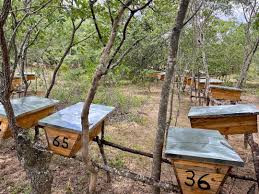
ZIMBABWE has taken a decisive step toward accessing the European Union honey market with the completion of a national training of trainers programme under the Zimbabwe Bee for Empowerment and Export project.
About 16 Government officers from the Department of Veterinary Services, Forestry Commission and Agricultural Business Advisory Services have been certified in the Codex Alimentarius food safety standards and EU Official Controls for honey export compliance.
The intensive, multi-province programme was funded by Agence Française de Développement and implemented by ZimTrade in partnership with the Ministry of Agriculture, Mechanisation and Water Resources Development.
French Agricultural Research Institute CIRAD and the University of Zimbabwe provided technical facilitation.
Training has already been conducted in Mashonaland West and Manicaland provinces, with the final cohort set to receive certificates on May 21, 2026 at Isango, Dete.
The training was delivered in two streams.
Part A covered Codex Alimentarius standards, including food safety and hygiene for honey, maximum residue limits, good beekeeping practices, and geo-referenced sample collection for national profiling.
Officers were also trained in the training-of-trainers methodology for district-level rollout.
Part C focused on EU Official Controls and allow listing requirements.
It included the design of the National Residue Monitoring Plan, EU regulations 2017/625 and 2022/1644, forensic sampling methods, laboratory standards for the Central Veterinary Laboratory, traceability through the TRACES-NT digital system, and physico-chemical profiling of 800 honey samples across 16 districts.
“Upon completion, these officers become the certified frontline of Zimbabwe’s honey export compliance infrastructure,” ZimTrade said.
The May 21 ceremony at Isango will mark the formal launch of the national cascade training to the district level, starting in Matabeleland North.
The rollout aims to transfer skills to rural beekeeping communities and strengthen compliance across the honey value chain.
ZimTrade said the programme represents Zimbabwe’s most significant investment yet in honey export compliance human capital and is a key step toward meeting EU requirements for national allow listing.
Zimbabwe has been working to diversify agricultural exports under the EU-ESA Economic Partnership Agreement.
Honey is identified as a high-potential product for smallholder farmers in Matabeleland North and other provinces.
The ZIMBA-BEE project is funded by AFD and implemented by ZimTrade, DVS and CIRAD.-herald