ZIMBABWE risks losing its foothold in the global lithium market despite rising demand for the critical mineral, with a new report projecting that the country’s share of global production will decline from about 9% to 6% by 2040.
The outlook comes at a time when lithium demand is expected to surge nearly six-fold by 2040, driven by electric vehicles and battery energy storage systems.
However, Zimbabwe faces growing competition, limited processing capacity and infrastructure constraints that could prevent it from fully capitalising on the global energy transition.
The Organisation for Economic Co-operation and Development (OECD), in its Regional Note on Critical Minerals in Africa, says global lithium supply will peak around 2030 before declining, even as demand continues to rise sharply.
Advertisements
The widening gap is expected to intensify competition among producers and reshape investment flows.
The OECD forecasts that Africa’s contribution to lithium output will remain modest, with Zimbabwe’s share falling from 9,3% in 2024 to 6% by 2040.
It adds that while some refining is taking place in Zimbabwe, no African country is expected to play a significant role in global lithium refining.
Zimbabwe introduced a ban on raw lithium exports in February to promote domestic value-addition.
However, the policy faces structural challenges, including limited refining capacity and weak infrastructure, which are likely to delay its impact on revenues.
At present, most lithium is still exported in low-value raw form, earning about US$375 per tonne, compared to up to US$20 000 per tonne if fully processed into lithium carbonate— a key input in lithium-ion battery production.
“Lithium demand will increase almost six-fold by 2040. Supply at current pipeline projects will peak around 2030 and then start decreasing,” OECD said in its regional note.
“African output will remain modest, with Zimbabwe decreasing from 9% of global production in 2024 to 6% in 2040.
“Although lithium refining is taking place in Zimbabwe, no African country will contribute significantly to global refining.”
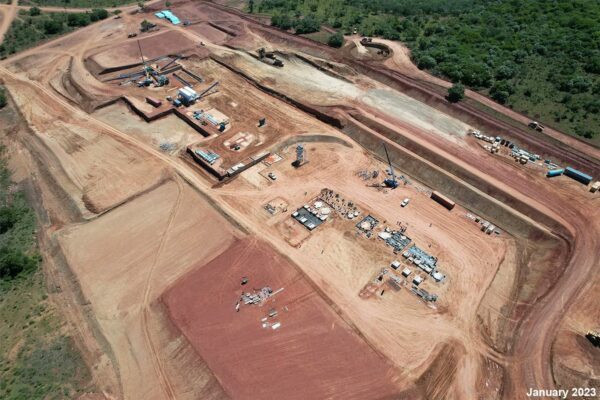
China’s Zhejiang Huayou Cobalt Company Ltd, which owns Arcadia Mine, recently announced its first shipment of lithium sulphate, marking a step toward intermediate processing.
However, lithium sulphate still requires further refining into battery-grade materials, meaning much of the value continues to be realised offshore.
The Zimbabwe Environmental Law Organisation says Zimbabwe is emerging as a key lithium supplier but stresses that investment stability and infrastructure development remain critical.
“Zimbabwe now ranks as a top African lithium producer accounting for 9,3% of global production in 2024 and attracting diverse international partners,” it said.
The organisation added that regional processing hubs under the African Continental Free Trade Area could improve competitiveness and reduce costs.
Zimbabwe’s major lithium deposits in Bikita, Goromonzi and Buhera continue to attract international investment, but analysts warn that without deeper beneficiation, the country risks remaining stuck at the lower end of the global value chain despite booming demand.-herald