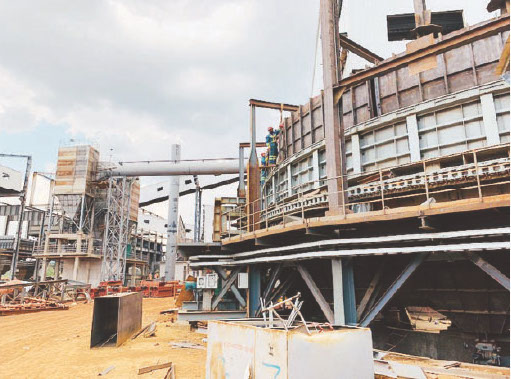
THE Midlands province has emerged as the leading destination for actual investment inflows in the first quarter of 2026 accounting for the largest share of capital and largely driven by the massive steel investment by Dinson Iron and Steel Company in Manhize, Zimbabwe Investment and Development Agency (ZIDA) has said.Corporate Advertising Packages
Data contained in ZIDA’s latest report shows that the Midlands attracted US$613 million, significantly ahead of Harare, which recorded US$430 million, and Masvingo with US$393 million.
“The geographical distribution of actual investment inflows is uneven, with a clear concentration in only a few regions.Zimbabwe Economic Reports
“The Midlands leads with US$613 million, followed by Harare at US$430 million and Masvingo at US$393 million. These three provinces alone account for 88% of total actual inflows.
“ The dominance of the Midlands is largely attributable to investment in the steel sector in Manhize by Dinson Iron and Steel Company.
“In contrast, the remaining provinces received comparatively modest inflows, with Mashonaland West (US$66 million) and Matabeleland South ($60 million) recording moderate figures, while the rest fell below $20 million,” reads part of the report.
The report underscores the growing concentration of capital in a few high-performing regions, largely driven by large-scale industrial projects and existing infrastructure advantages.
“The significant gap between the top-performing provinces and the rest highlights a geography dependent Investment pattern, where capital tends to gravitate toward areas with existing capacity to support investment projects.
“The wide variations across the provinces point to opportunities for targeted regional development strategies aimed at stimulating investment in lagging areas, particularly through infrastructure expansion, sector diversification, and strengthening of provincial value chains.”
Meanwhile, the report notes that investment projects monitored during the quarter generated a total of 3 817 formal jobs registered with the National Social Security Authority (NSSA), reflecting continued, albeit modest, progress in employment creation.
Construction and manufacturing sectors were the major drivers of job creation, contributing 1 442 and 1 343 jobs respectively.
Together, the two sectors accounted for 73 percent of all new formal employment opportunities, reinforcing their position as key pillars of labour absorption in the economy.
Mining also made a notable contribution with 513 jobs, while services, transport and agriculture recorded moderate employment gains.
However, sectors such as tourism and hospitality, energy, health, financial services, ICT and real estate registered minimal job creation during the period.
Despite these gains, ZIDA noted that the overall contribution of the new jobs to the national employment landscape remains limited.
When benchmarked against national statistics, the 3 817 jobs created represent only a small fraction of Zimbabwe’s total formal employment.Zimbabwe Economic Reports
According to the Zimbabwe National Statistics Agency (Zimstat) Q2 2025 report, formal employment accounts for 36 percent of total employment, equivalent to 1 140 886 workers, while the informal sector dominates with 59 percent, or 1 863 695 workers.
The jobs created during the first quarter therefore constitute approximately 0,3 percent of total formal employment, highlighting the need for sustained investment inflows and deliberate policies that promote labour-intensive growth.
The findings point to the importance of broadening investment beyond traditional hubs while simultaneously strengthening sectors with high employment absorption capacity to achieve more inclusive and impactful economic growth.-herald