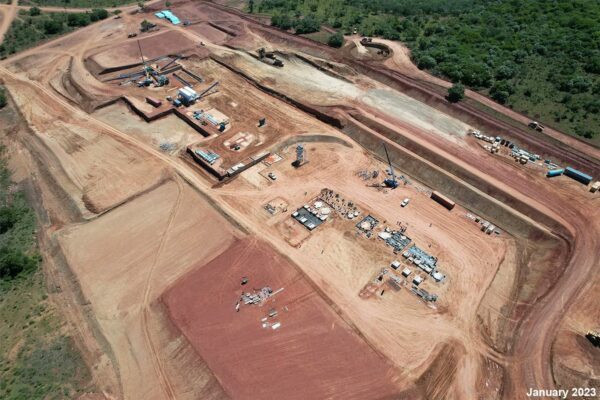
TWO of Buhera’s largest mining companies—Sabi Star Mine and Dorowa Minerals Limited—are establishing value addition and beneficiation infrastructure in line with the national ban on raw mineral exports, particularly lithium.
The projects are expected to spark rural industrialisation in one of Manicaland’s driest and most impoverished districts.
The developments were highlighted during Vice President, Dr Constantino Chiwenga’s tour of the two mines this week.
Following his visit to Dorowa Minerals, which is being revived through a US$5,3 million injection from the Mutapa Investment Fund, and to Sabi Star Mine, VP Chiwenga expressed satisfaction with progress at both sites.
He underscored the importance of ensuring that all mineral output is value-added and beneficiated to drive industrialisation and economic growth in Buhera.
Phosphate produced at Dorowa is a key input in the manufacture of Compound D and Nitrogen, Phosphorous and Potassium (NPK) fertilisers at Zimphos and the Zimbabwe Fertiliser Company (ZFC).
“When I last visited Sabi Star Mine, the power plant was not yet operational, but it is now up and running. They have also discovered substantial tantalite deposits, diversifying their operations. We have discussed the way forward, emphasising beneficiation and value addition to grow the manufacturing sector,” said VP Chiwenga.
He stressed that rural development and industrialisation must go beyond the ban on raw mineral exports, focusing instead on sustainable growth through manufacturing, infrastructure development, and corporate social responsibility.
“Extracting minerals without adding value does not contribute to sustainable growth. We must prioritise industrial growth, manufacturing and infrastructure development for current and future generations. These companies are producing significant quantities, but production must now be directed towards value addition and beneficiation,” he added.
VP Chiwenga said the country is now firmly on track, noting that new equipment has been installed at Dorowa Minerals and that fertiliser production has become critical to sustaining crop yields.
“The plant itself is a marvel. Fertiliser has become key to our crop production. Because of the geopolitical situation, much of the fertiliser we used to source was produced in the Middle East; we now need to produce fertiliser ourselves. We want a Whole-of-Government approach to ensure all required steps are carried out concurrently so that we can produce enough of our basic fertiliser,” he said.
Dorowa Minerals Ltd general manager, Mr Hensen Mambo, outlined ambitious plans to unlock US$1,2 billion for the Shawa all-in-one project, which will replicate Zimphos’ operations and target regional markets.
The first phase, requiring US$525 million, will establish a mine, fertiliser production facility, and acid plant, designed to meet Zimbabwe’s needs and supply SADC, COMESA, and wider African markets.
“At a strategic level, Dorowa owns the Shawa claims, which contain higher-grade phosphate, vermiculite, and magnetite. The long-term strategy is to unlock funding for the project and produce beyond national requirements. We are engaging partners and exploring debt financing through Afrexin Bank and other multilateral institutions,” said Mr Mambo.
The mine is expected to produce 150 000 tonnes of phosphate concentrate annually, covering more than half of Zimbabwe’s basal fertiliser demand.
Mr Mambo added that full-capacity operations will significantly lower costs for farmers.
“Currently, a bag of basal fertiliser costs about US$35. Once we are fully operational and aligned with other key enablers, we believe the price could drop to around US$20, making fertiliser more affordable for the local agriculture sector,” he said.
Sabi Star Mine, a Maxi Mind Zimbabwe subsidiary, has already accumulated two months’ lithium ore inventory since the ban – and is aligning operations with the Government’s value addition and beneficiation thrust.
Its chairman, Mr Zou Bill said they will develop downstream industries, leveraging their China-based battery material production experience, and are exploring new resources to implement this strategy soon. He revealed that the company has invested US$170 million in lithium mining operations, with an annual output of one million tonnes of raw lithium ore.-herald
Mining drive billion-dollar rural industrial push