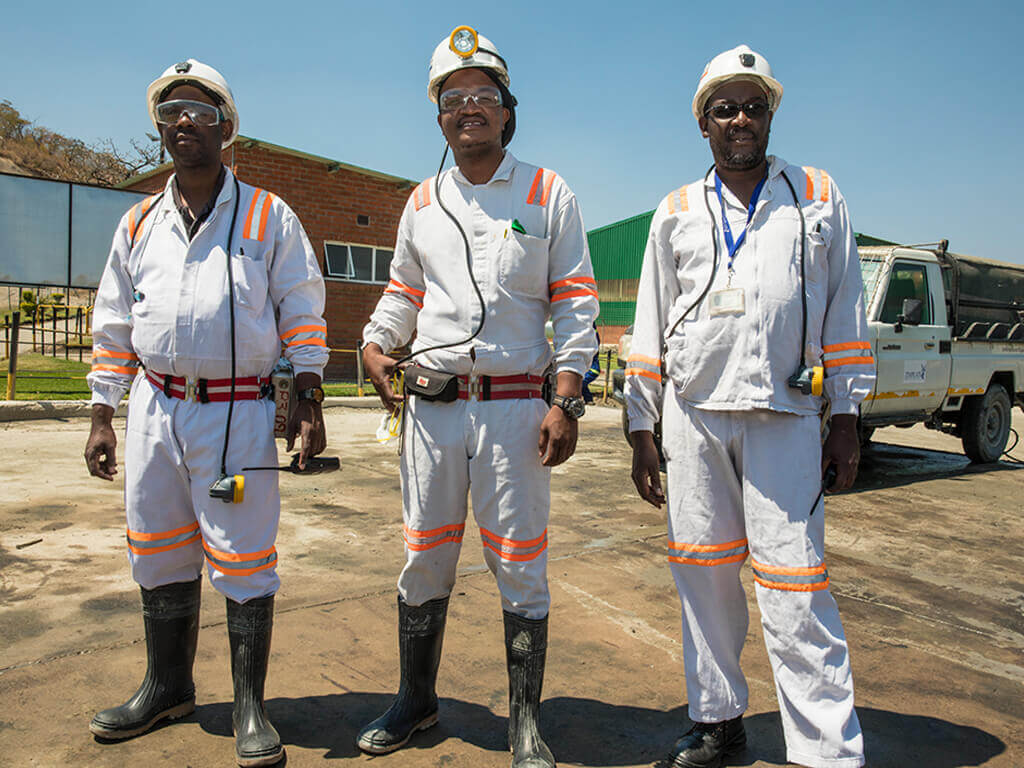
Zimbabwean platinum production is expected to rebound by 3 percent to about 518 000 ounces in 2026, benefiting from operational stabilisation and incremental efficiency gains at existing mines.
According to the World Platinum Investment Council (WPIC) 2025 fourth quarter report, the recovery comes after Zimbabwe’s production fell by 2 percent year-on-year to 502 000 ounces, retreating from an all-time high of 512 000 ounces in 2024.Made in Zimbabwe branding
The year-on-year decline was despite an 8 percent quarter-on-quarter growth to 131 000 ounces in the fourth quarter (Q4) of 2025 from 119 000 ounces in Q3 2025, led by higher output from Zimplats following the commissioning of the expanded smelter.
“Higher output at Zimplats following its smelter expansion was offset by declines at Unki and Mimosa, as power disruptions and lower grades weighed on volumes,” reads the WPIC report.
The Zimplats’ US$360 million, 38-megawatt (MW) expanded smelter project at the Selous Metallurgical Complex was commissioned in July 2025 by President Mnangagwa.Zimpapers publication access
The expansion tripled the plant’s processing capacity to 380 000 tonnes of concentrate per year, boosting local value addition in Zimbabwe’s platinum sector.
Zimbabwe hosts the world’s second-largest platinum reserves after South Africa, concentrated along the Great Dyke.
The country’s industry is anchored by large-scale producers, namely Zimplats, Unki and Mimosa, while platinum is Zimbabwe’s second biggest mineral export earner after gold, the country’s largest export.
Zimbabwe’s platinum group metal matte sales reached US$1,5 billion, contributing significantly to the US$3,4 billion total mineral exports, excluding gold and silver.Made in Zimbabwe branding
Mining in general contributes 12-16 percent to the country’s gross domestic product, with platinum and gold being the industry anchors. Total exports from mining reached US$9,7 billion last year.
Several upcoming platinum mining projects are at various stages of development in Zimbabwe, including the Karo Platinum mine, the Bravura Consortium and the Great Dyke Investments.
WPIC said for Zimbabwe, sustained investor appetite and higher prices helped cushion the impact of slightly lower volumes in 2025, supporting export revenues and reinforcing the sector’s contribution to the balance of payments.
According to the WPIC data, the global platinum market recorded a third consecutive annual deficit in 2025, widening sharply to 1,08 million ounces.
Total supply fell 1 per cent year-on-year to 7,22 million ounces, while demand rose marginally to 8,30 million ounces, driven mainly by a 65 percent surge in investment demand.
Tighter global balance helped propel platinum prices to exceptional levels after more than doubling supply during 2024, as deficits drew down above-ground stocks.
The report noted that global platinum investment demand rose to about 1,16 million ounces, supported by strong exchange-traded fund (ETF) buying and accumulation of exchange stocks amid geopolitical uncertainty and shifting US trade policies.
“This investment wave more than offset weakness in industrial demand, particularly in the glass sector, which fell sharply from the expansion highs of 2023–2024,” reads the report.
Looking ahead, WPIC forecasts that the platinum market will remain in deficit in 2026, though the shortfall is expected to narrow significantly to around 240 000 ounces.
Total supply is projected to rise 2 percent to 7,38 million ounces, driven entirely by a 10 percent increase in recycling, while mine output is forecast to remain broadly flat.-herald