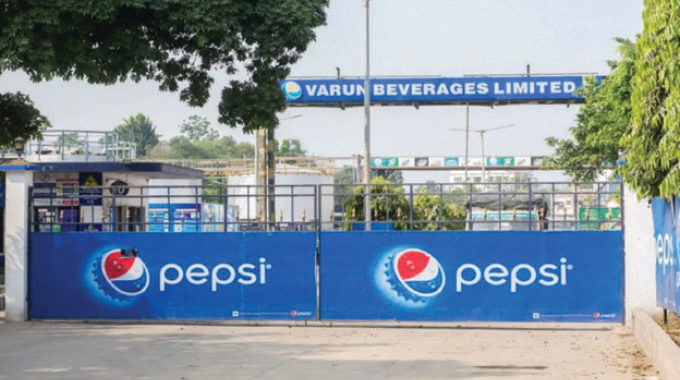
VARUN Beverages Ltd has invested more than US$260 million in new beer and snacks manufacturing plants, set to be officially opened by President Mnangagwa in the coming months, as the company expands its food and beverage portfolio in Zimbabwe.
The investment is part of a broader wave of foreign direct commitment into the country, with the Second Republic courting global capital across multiple sectors under its “Zimbabwe is open for business” mantra.
Recent engagements at the World Government Summit in Dubai saw President Mnangagwa hold high-level talks with international investors on technology, mining and infrastructure development, underscoring the administration’s drive to position Zimbabwe as a competitive investment destination .
Varun Beverages has committed US$250 million to establish a beer plant in partnership with Danish brewing giant Carlsberg, a move set to create at least 2 500 local jobs.
The company has also invested US$15 million in a new snacks manufacturing plant, producing products under PepsiCo’s globally renowned Cheetos brand.
The snacks facility has a production capacity of 6 000 tonnes per day and will manufacture Cheetos puffs and ring-shaped snacks, complementing VBL’s existing snack portfolio of Lay’s, Doritos and Simba.
The Cheetos line was officially launched in late January 2026, marking a major expansion of the company’s manufacturing footprint in the country .
Mr Jaipuria said Varun Beverages had partnered with various grain farmers locally, who are supplying maize for snack production, creating a robust value chain.
Speaking after paying a courtesy call on President Mnangagwa at State House in Harare yesterday, Varun Beverages Zimbabwe chairman Mr Ravi Jaipuria said the company had formally invited the President to commission both plants in April or May this year.
“We have requested His Excellency to come and inaugurate our snacks plant with a capacity of 6 000 tonnes, under the brand name of Cheetos,” he said.
“We have also requested His Excellency to come for the groundbreaking ceremony for our beer plant, which has been tied up with Carlsberg, and we are hoping His Excellency will give us time in April or May to inaugurate the beer plant where we plan to invest US$250 million. The snack plant was around US$15 million.”
Mr Jaipuria said Varun Beverages had partnered with various grain farmers locally, who are supplying maize for snack production, creating a robust value chain.
“The snack plant will give about 100 people employment while the beer plant will have about 2 500 employees,” he said. “The plants will help the farmers, with all the 6 000 tonnes for the snacks plant to be produced from maize purchased locally from farmers.”
The company said these expanded maize-based snack and beverage projects would generate substantial additional demand, by creating more income opportunities for thousands of farmers and strengthening the broader agricultural value chain.
It would also strengthen backward linkages between manufacturing and agriculture and have an employment multiplier effect through indirect employment.
Further demonstrating its long-term commitment, Varun Beverages is setting up its first solar power plant, with 20MW set to be generated this year and an additional 300MW to be added over the next three years.
“We are starting our first solar power plant, first layout at 20 megawatts which will be started this year and in three years we will complete 500 megawatts which will be commissioned in this country,” said Mr Jaipuria.
The Varun Beverages expansion reflects growing investor confidence in Zimbabwe’s economic trajectory, with the company’s management on record as saying Zimbabwe’s evolving economic environment and improving currency stability are creating new investment opportunities.
This sentiment is echoed by economic analysts, who note that exchange rate stability since the liberalisation of the forex market in April 2025 has prompted an ease in inflationary forward pricing, with prices of manufactured food and beverages expected to soften in 2026.
Local production of internationally branded snacks and beverages reduces reliance on imports, preserving foreign currency.
Industry experts note that localising production typically leads to more accessible pricing for consumers while bolstering the national economy.-herald