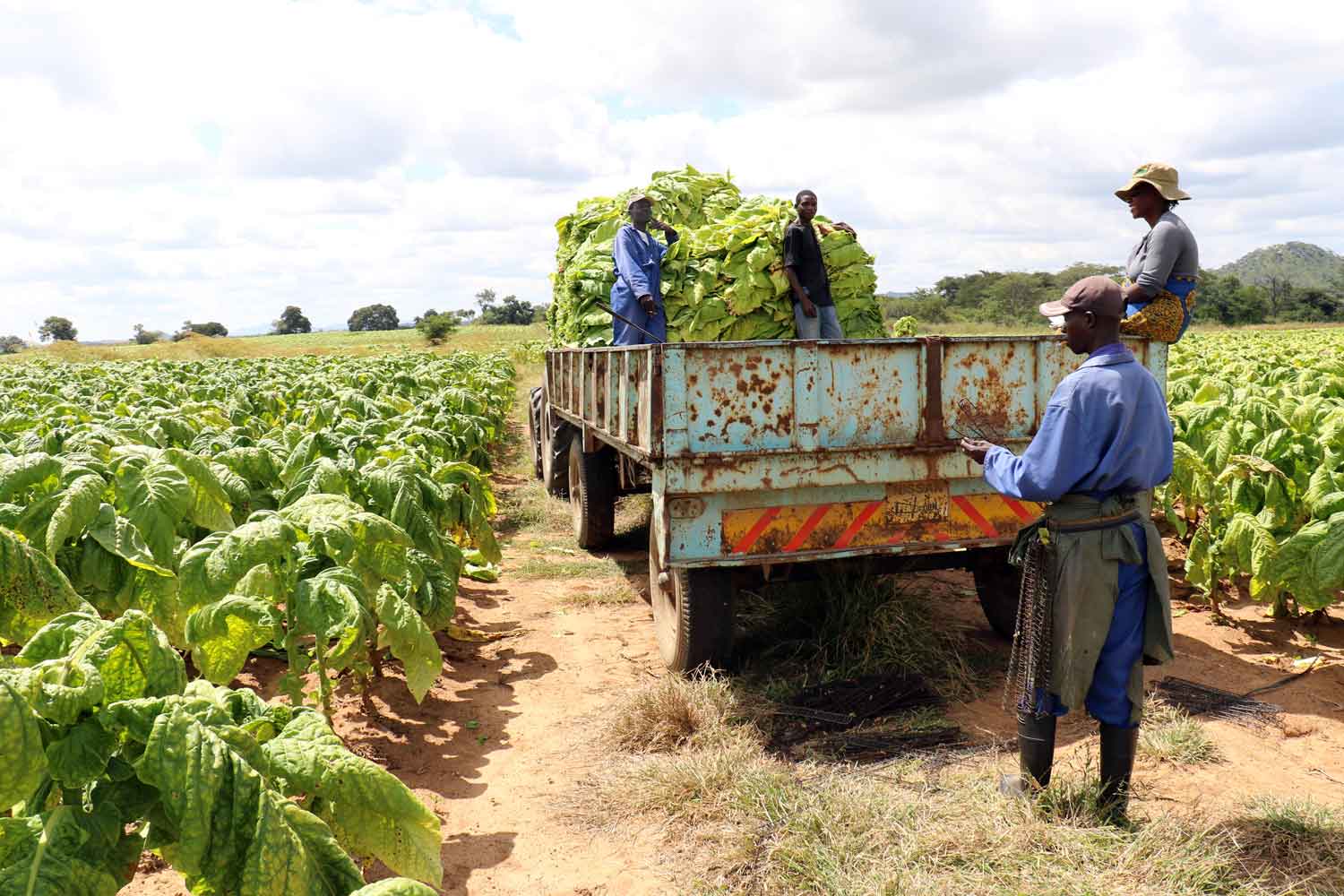
Zimbabwe’s tobacco export sector has started 2026 on a high note, with the value of exports surging by 73,8 percent while volumes registered a 64,3 percent increase compared to the same period last year.
Tobacco is strategically important to Zimbabwe because it serves as the nation’s leading agricultural foreign currency earner, contributing significantly to the gross domestic product, rural livelihoods, and overall economic stability. As the largest producer in Africa and the fourth-largest in the world, the industry is the backbone of the country’s commercial agriculture sector.
An update from the Tobacco Industry and Marketing Board (TIMB) shows that a total of 54,8 million kilogrammes of tobacco have been exported so far this year, generating US$399,8 million at an average price of US$7,30 per kg.
The Far East has cemented its position as the premier destination for Zimbabwean tobacco.
Exports into this Asian region amounted to 36,2 million kg valued at US$320,9 million. The average price paid by Far East buyers stood at US$8,86 per kg.
The Far East boom drove the overall growth while other regions showed varied results.
The Middle East emerged as the second-largest export market by volume after importing 5,1 million kg worth US$14,298 million. The average price realised in that regional market was at US$2,79 per kg.
Europe imported just under 7,9 million kg of tobacco valued at over US$40,7 million.
The European union markets paid an average of US$4,21 per kg, while other European nations averaged US$5,96.
Africa and the Americas rounded out the global destinations, with imports of 3,2 million kg and 2,3 million kg, respectively.
At the same time last year, Zimbabwe’s tobacco export volumes stood at 33,35 million kg, valued at US$230 million at an average price of US$6,90 per kg.
For America and Africa, the latest figures represent a 64 percent increase in volume and a 74 percent jump in value, indicating not only higher throughput but also firmer pricing on the international market.
TIMB public affairs officer Mrs Chelesani Tsarwe highlighted the significant price differential for processed tobacco.
She noted that while Zimbabwe’s unprocessed flue-cured tobacco leaf is currently traded at an average range of US$3,300 to US$8,000 per tonne (or US$3,30 to US$8 per kg), exporting raw leaf represents the lowest point on the value chain.
“As TIMB, in supporting the Government, we consistently emphasise that exporting raw leaf represents the lowest point on the value chain, while local processing enables Zimbabwe to retain more revenue, create jobs, and support downstream industries”.
Ms Tarwe outlined that TIMB was supporting new processing plants and policies designed to raise the proportion of locally processed tobacco to about 30 percent of the crop by 2030.
“Value addition is central to Vision 2030 and ensuring Zimbabwe captures more jobs, revenue and foreign currency,” she added, reaffirming that the improving investment climate, supported by policy reforms and Special Economic Zones, is facilitating more efficient, competitive manufacturing and export operations.
The industry supports over 130 000 households, with over 85 percent of the crop grown by small-scale farmers who benefited from land reforms. It provides employment directly and indirectly to roughly 250 000 people, including farm labourers and those in support services.
The 2025 tobacco marketing season concluded as one of the strongest in the country’s history, with total production surpassing 353 million kilogrammes. This represents a 52,92 percent increase from the 230,8 million kg recorded in 2024, rebounding strongly from the previous year’s El Niño-induced drought.
The crop fetched over US$1,17 billion, marking a 48,15 percent increase compared to the US$791,7 million earned in 2024.-herald