THE Mutapa Investment Fund’s decision to unbundle Kuvimba Mining House marks a shift in how Zimbabwe’s sovereign mining assets are structured, governed and ultimately valued, analysts have said.
By unbundling the multi-commodity holding company and reorganising it into five commodity-focused entities, Mutapa believes specialisation, clarity and accountability can succeed where scale and complexity have constrained performance.
Analysts say the move marks a value-unlocking strategy, aimed at stripping away the “conglomerate discount” that often afflicts diversified mining groups and replacing it with focused operating vehicles capable of attracting capital, partners and management attention on a project-by-project basis.
However, they warn that the restructuring alone will not be enough.
Without disciplined execution, adequate funding and visible operational improvements, the unbundling is at risk of becoming a mere exercise rather than a transformational one.
Under the restructuring, Kuvimba’s assets were reorganised into Mutapa Gold Resources, Mutapa Base Metals, Mutapa Energy Minerals, Mutapa Platinum Group and Mutapa Frontier, which will focus on rare earths and frontier minerals.
Mutapa’s chief investment officer Mr Simba Chinyemba described the move as a strategic shift away from a broad holding model towards specialised verticals designed to sharpen focus, improve governance and unlock value.
“Globally, diversified conglomerates tend to trade at a discount because management attention and capital allocation are spread too thin. By creating commodity-specific vehicles, Mutapa is attempting to remove that discount and allow each asset class to stand on its own merits,” said Harare-based mining analyst Mr Tapiwa Katsande.
He noted that Kuvimba’s previous structure — described by Mutapa as a “spiderweb” of entities spanning the former Industrial Development Corporation and multiple minority holdings — made it difficult to assess performance, assign accountability and attract funding.
“From an investor or lender perspective, complexity is risk. When assets are buried inside layers of holding companies, it becomes harder to price risk, harder to ring-fence projects and harder to partner,” Mr Katsande added.
Bankability
One of the most immediate potential benefits identified by analysts is improved bankability, particularly for capital-intensive projects such as platinum group metals (PGMs).
“Each entity becomes easier to evaluate and compare with peers, which is very useful when it comes to sourcing long-term financing. Zimbabwe’s mineral reserves also justify such an approach,” said Trigrams Investments analyst Mr Wafa Kuchera.
Having specialised units, he said, ensures that specific skills and expertise are acquired to manage each unit, streamline processes and ensure that the end-to-end production, processing and marketing of particular minerals are handled at the highest level of expertise.
“While short-term cross-unit efficiencies might be sacrificed, having specialists implement world-class standards peculiar to each unit has long-term benefits,” Mr Kuchera said.
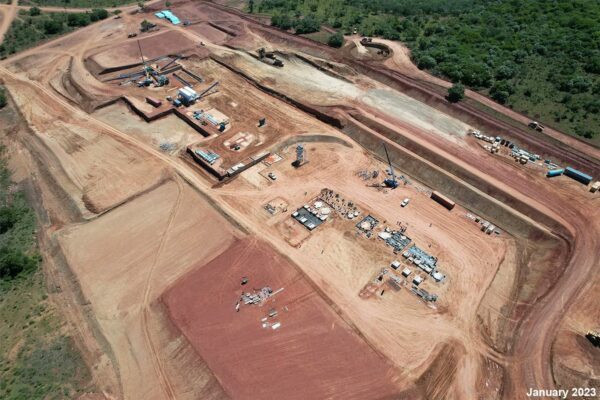
Darwendale’s Great Dyke Investments, which hosts nearly 44 million ounces of PGMs, is regarded as one of Zimbabwe’s most significant undeveloped mining assets.
Mutapa Platinum group chief executive officer Mr Munashe Shava recently indicated that the company is at an advanced stage with funding partners and plans a phased development strategy, starting with an open-pit operation.
“A phased strategy reduces upfront capital risk and allows the project to generate cash flows earlier,” said analyst Mr Tinevimbo Shava. “But markets will want to see timelines translate into actual ground activity.”
He also views Mutapa Gold as a potential near-term cash generator under the new structure, particularly through assets such as Elvington, Shamva and Jena.
“Gold is typically the anchor commodity in these portfolios because it can generate earlier cash flows compared to base metals or PGMs. If Mutapa can stabilise production at Elvington through contract mining and then move into deeper underground development, that cash can support the broader FIRE (fix, revive, strengthen and extract value) strategy,” Mr Shava added.
According to Mr Chinyemba, the restructuring allows the fund to identify “crown jewel” assets while isolating risks.
Economic analyst Mr Walter Mapfumo said one of the biggest historical weaknesses of State-linked mining entities has been cross-subsidisation, whereby profitable assets end up funding loss-making ones.
“Commodity verticals should, in theory, prevent that, but only if Mutapa enforces hard budget constraints,” he said.
Flattening management hierarchies and appointing specialist heads, he added, is a positive signal, but emphasised that governance reform is not merely structural; it is about reporting standards, performance benchmarks and consequences for underperformance.
According to Mutapa, the restructuring reflects how global majors such as BHP and Rio Tinto organise themselves to be effective and accountable. “The next 12 to 24 months are critical. Markets will be looking for very specific milestones, such as funding closures at Darwendale, production stabilisation at gold assets and clear disclosure on how each vertical is performing,” Mr Kuchera concluded.-herald