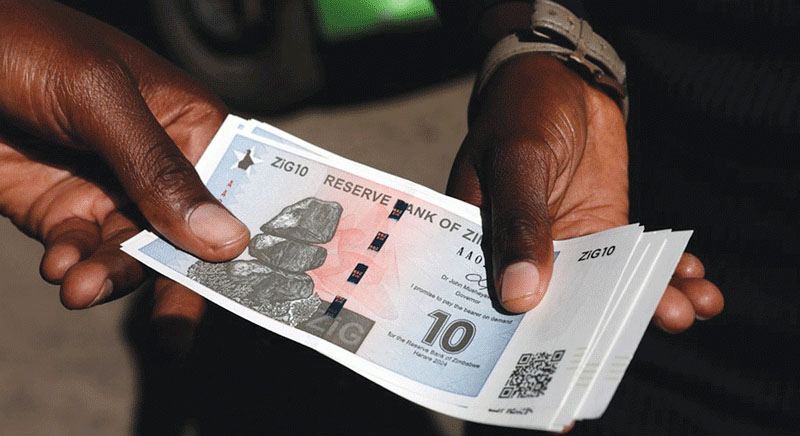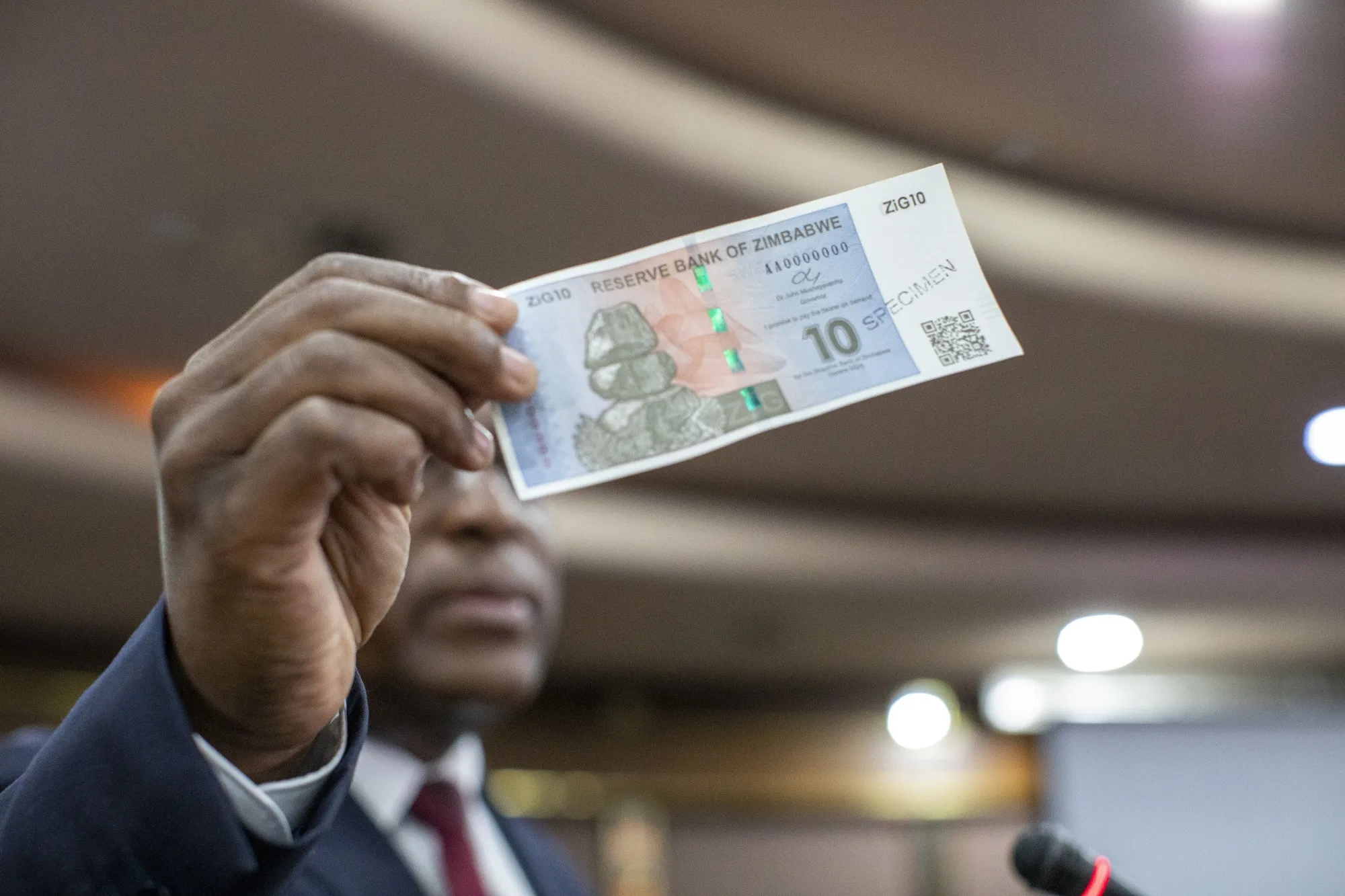
The Reserve Bank of Zimbabwe has hailed 2025 as a decisive year for monetary and financial stability, citing falling inflation, exchange rate stability, foreign reserve accumulation and restored policy credibility as major highlights of the year.
In its Quarterly Snapshot on Recent Monetary, Currency, Price and Financial Developments as at December 31, 2025, the central bank said the outcomes reflected the effectiveness of a disciplined monetary policy framework.
The bank said its monetary policy is anchored on tight money supply management, improved fiscal coordination and a more flexible exchange rate system under the Willing-Buyer Willing-Seller arrangement.
“Monetary policy during 2025 demonstrated clear effectiveness, restored discipline, and measurable macroeconomic gains, particularly in inflation control and exchange rate stability.
“Sustaining this trajectory in 2026 will require continuing to walk the talk in prudent money supply management, foreign currency reserve accumulation and strong fiscal and monetary policy complementarity,” said RBZ Governor Dr John Mushayavanhu.
Among the central bank’s headline achievements was the sharp dissipation of ZiG annual inflation to 15 percent by the end of 2025, well below the 30 percent target.
Monthly inflation also remained contained, averaging 0,4 percent from February to December, reinforcing confidence that price stability had become entrenched rather than episodic.
The RBZ also cited sustained exchange rate stability as a key 2025 milestone.
The interbank exchange rate largely hovered around ZiG26 per US dollar, while the parallel market premium was kept below 20 percent for most of the year, a marked improvement from previous periods of severe misalignment.
Investment analyst Ms Rudo Ndlovu said the exchange rate and inflation outcomes materially change Zimbabwe’s economic outlook for 2026.
“When inflation is trending down and the exchange rate is broadly predictable, investors can finally begin pricing risk more rationally,” Ms Ndlovu said.
“For 2026, this opens space for longer-term contracts, improved portfolio flows and renewed interest in productive sectors, provided policy consistency is maintained.”
She added that stable prices reduced pressure on wages and interest rates, improving the investment climate across manufacturing, mining and services.
On the monetary side, the RBZ highlighted that reserve money growth was kept under tight control at ZiG5,3 billion as at end-December 2025, while central bank financing of Government spending remained at zero, reinforcing fiscal discipline.
Economist Dr Shaun Chikovore said this restraint was critical for sustaining gains into 2026.
“Reserve money growth has historically been the trigger for inflationary episodes in Zimbabwe,” he said. “The fact that growth was contained, alongside zero quasi-fiscal activity, signals a structural shift. If this discipline holds in 2026, inflation expectations are likely to remain anchored.”
The RBZ also underscored improvements in the external sector.
Foreign currency receipts rose to US$16,2 billion in 2025, up from US$13,3 billion in 2024, enabling the central bank to accumulate reserves of US$1,2 billion, equivalent to 1,5 months of import cover.
Importantly, reserves now provide about six times cover of ZiG reserve money and nearly double the total ZiG deposits.
-herald