The Government has challenged Kutsaga Research to increase potato seed production to ensure the country is self-sufficient by 2028 and support the import substitution drive.
Stakeholders in the agriculture value chain on Wednesday gathered in Harare for the commissioning of the Kutsaga Tissue Culture Facility.
The event was running under the theme: “Towards National Development Strategy 2 (NDS2): Kutsaga Tissue Culture Facility as an Accelerator for the Horticulture Recovery and Growth Plan (HRGP), Agricultural Food Systems and Rural Transformation Strategy 2 (AFSRTS2).”
Officially commissioning the state-of-the-art Kutsaga Tissue Culture Facility, Lands, Agriculture, Fisheries, Water and Rural Development Minister Dr Anxious Masuka urged the institution to increase potato seed production to stop imports by 2028.
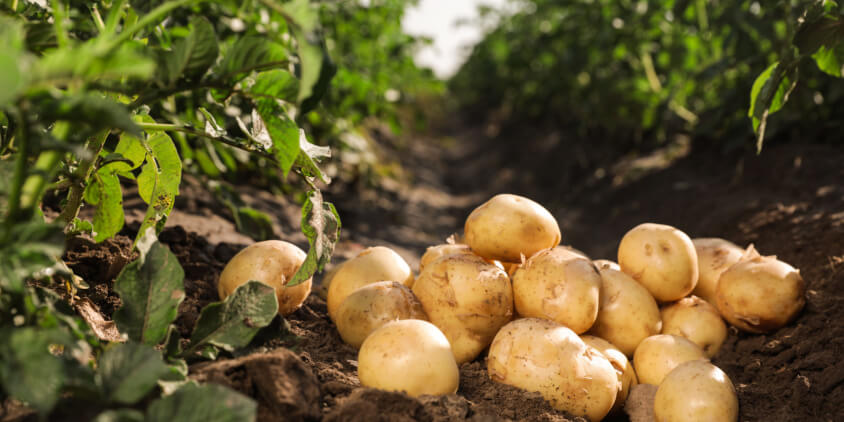
“Under the Irish potato, we want Kutsaga to increase its local seed sales from the current market share of 20 percent to levels that ensure that the country is self-sufficient. We want to eliminate potato seed imports by 2028,” he said.
Places such as Nyanga’s quarantine area have been a traditional local source of potato seed.
The Government declared potato a strategic crop to enhance food security at both household and national levels and instituted several measures, chief among them a ban on table potato imports since 2010.
This was a deliberate measure to protect the local potato farmers from unfair competition from cheap table potato imports from neighbouring countries. The Government allowed supervised importation of certified potato seed by seed houses to complement local seed production.
Dr Masuka called on Kutsaga to do more research and come up with varieties required by the market.
“Your business and research teams need to engage the leading Irish table potato-consuming companies to identify the potato specifications they require for their products. Make use of your modern tissue plant to come up with varieties exhibiting the traits so required by the industry to stop imports,” he added.
Kutsaga chief executive officer, Dr Frank Magama, said his organisation had invested in a national asset, which enabled them to produce high-quality, disease and virus-free seedlings.
“We were given the mandate to produce potato seed, as the country did not have seed sovereignty. This facility allows us to produce seed without going to quarantine areas such as Nyanga, as was the norm in the past,” he highlighted.
Dr Magama said they were producing first-generation seed in greenhouses using the tissue technology.
“Over the years, we have expanded the supply of potato seed on the market to the current 20 percent share.
“Minister Masuka has challenged us to come up with new varieties such that by 2028, there will be no more potato seed imports,” he added.
Kutsaga, under the auspices of Zimbabwe Potato Micro-Propagation Association (ZPMA), has been designated as a certifying potato seed agent mandated to produce and market potato seed.
It has a state-of-the-art laboratory and purpose-built greenhouse hardening facilities for the commercial production of clean, disease-free potato plantlets using tissue culture technology into mini tubers, which are later transferred into the field as generation one (G1) to generation four (G4) for the production of ware and table potatoes.
ZPMA has contracted potato seed growers in suitable areas to assist in the seed multiplication programme. The potato seed multiplication programme is meant to address the critical shortage of the potato seed, which has seen the country importing 60 percent of its requirement, as a result of the reduced production of seed from the Nyanga quarantine area.
Meanwhile, statistics from the Zimbabwe National Statistics Agency (ZimStats) show that potato seed imports rose 31 percent from US$9,740 million from January to October in 2024 to US$12,736 million in the comparable period this year.
In volume terms, potato seed imports increased 25 percent from 13 to 16 million kilogrammes.
The Government’s call for import substitution through local production has resulted in a 100 percent increase in homegrown table potato cultivation, as farmers collaborate with agro-processors through off take arrangements for enhanced production, market access and sustainability.-herald