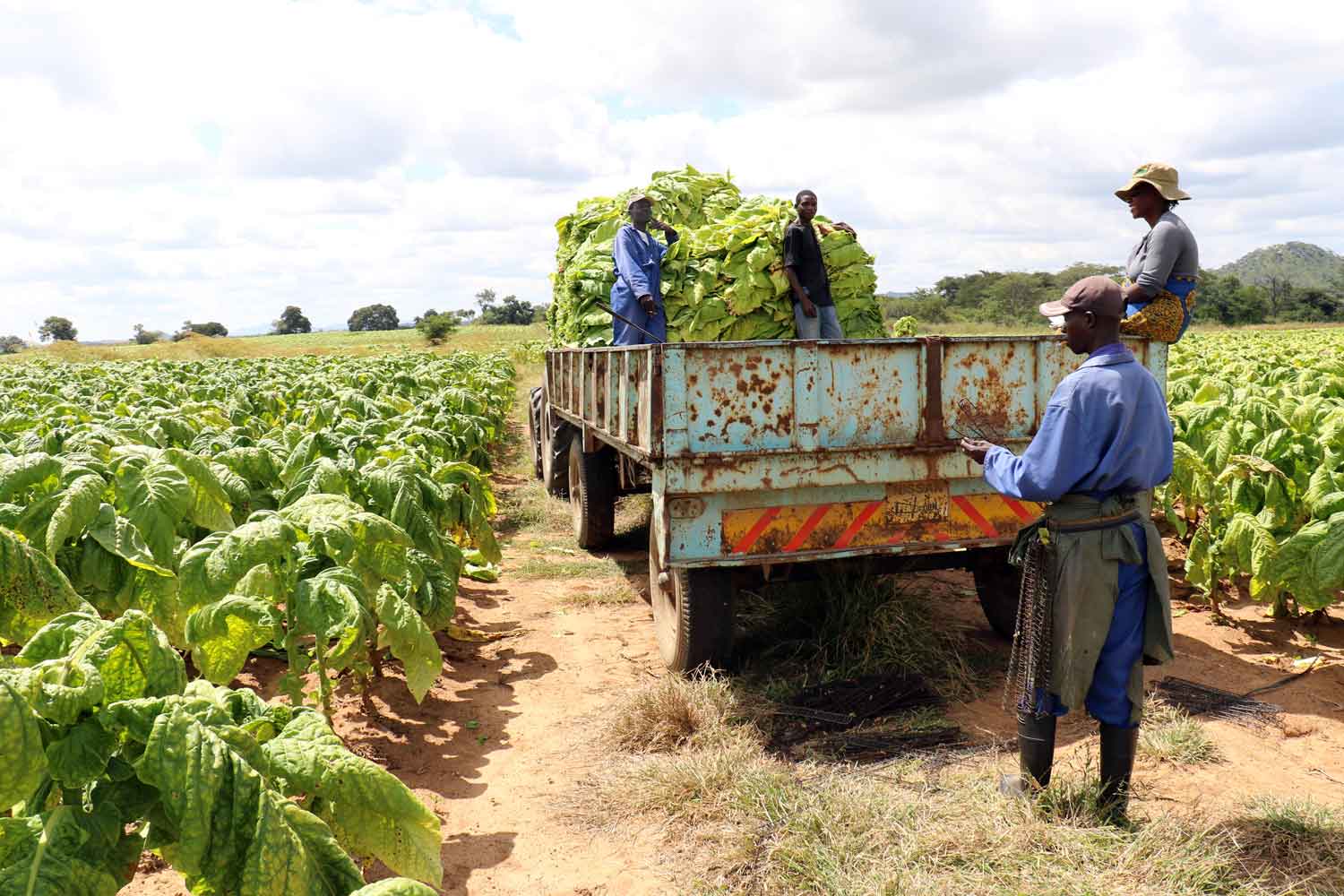
THE hectarage under irrigated and dryland tobacco has expanded by 21 percent from the 83 391 hectares (ha) recorded during the corresponding period last year to 100 594ha this season.
Latest statistics from the Tobacco Industry and Marketing Board (Timb) show that as of December 12, Mashonaland West had the biggest area under both dryland tobacco and irrigated tobacco.
Farmers in the province have planted 21 578ha of dryland tobacco and 4 910 hectares of irrigated tobacco, marking a 33 percent increase from 20 903 hectares planted during the same period last year.
Manicaland has 26 484ha of tobacco planted, with irrigated tobacco accounting for 17 870ha, while dryland tobacco sits on 8 614ha. This constitutes a three percent increase from the 25 780ha planted last season. In third position is Mashonaland Central with 24 905ha of the golden leaf, up from the 19 418ha planted during the same period last season. Dryland tobacco is on 22 139 ha, marking a 28 percent surge from last season.
Irrigated tobacco is sitting on 2 766ha, down from 3 715ha.
Mashonaland East occupies fourth position with 22 141ha of the crop, with dryland tobacco covering 14 063ha and the irrigated crop sitting on 8 078ha, which marks a 33 percent increase.
Last season, the province had planted 16 667ha for both irrigated and dryland tobacco during the corresponding period.
The Midlands has 381ha of the golden leaf, down from last season’s 500ha during the same period. This time around, irrigated tobacco is occupying 40ha, with the dryland crop covering 341 ha.
Farmers in Masvingo have planted 109ha of the crop, seven of which are under irrigation, with the remaining 102 hectares on dryland.
Matabeleland North farmers have planted the least hectarage with 41ha of dryland tobacco.
Tobacco continues to be the main livelihood option for millions of smallholder farmers. As an important source of income and rural employment, tobacco production has expanded to previously non-growing regions like Matabeleland.
There has been an increase in the number of tobacco growers over the years due to the crop’s organised marketing system.
More than 90 percent of the growers are being funded under the contract system, with the remainder self-financing their operations.
The Government is, however, exploring ways of establishing alternative domestic funding mechanisms for tobacco so that the country does not rely on offshore funding for the production of the crop.
Stakeholders have emphasised the need for innovative funding mechanisms to ensure sustainable growth and development, as well as increasing value addition and beneficiation of the crop.
The Government has since proposed a US$60 million kitty to stimulate local financing for tobacco farming.-herald