Tanganda Tea Company has reported a difficult financial year to September 30, 2025, as extreme weather, soft international commodity prices and subdued consumer demand weighed heavily on volumes across all operating units.
Chairperson Herbert Nkala said the year’s performance was shaped by a convergence of operational headwinds, though the company remains confident that ongoing efficiency programmes and diversified markets will support a recovery in the coming year.
Revenue fell to US$19,2 million, a decline of 26 percent from US$25,8 million in the previous year, largely due to reduced agricultural output. The company posted a loss after tax of US$4,2 million, compared with a profit of US$1,4 million the year before, signalling the severity of the disruptions that hit the business.
Mr Nkala noted that prolonged heat stress, late rainfall, and a damaging hailstorm in November 2024 placed the agricultural cluster under unusual strain.
“Our plantations faced extreme weather events at every critical phase of the crop cycle, leading to significant yield reductions across tea, macadamia, coffee, and avocado,” he said. “The scale of the impact was unprecedented.”
Tea production was severely disrupted, with bulk tea output falling 11 percent from 8 113 tonnes to 7 245 tonnes. The first half of the year was marked by erratic rainfall and persistent heat, both of which affected leaf recovery and quality.
Export volumes dropped 19 percent to 4 982 tonnes, as Tanganda contended with an oversupplied global tea market that pushed selling prices down to US$1,27 per kilogramme, from US$1,34 a year earlier.
Avocado production fell even more sharply, declining 48 percent to 2 080 tonnes from the previous year’s 3 976 tonnes. Mr Nkala attributed the performance to the prolonged heat, the alternate bearing phenomenon typical of the crop, and damage from the late-season hailstorm.
Exports of secondary grade fruit collapsed by 72 percent to 844 tonnes, while primary grade shipments slipped slightly.
“The avocado market remained challenging,” Mr Nkala said.
“We faced reduced volumes at a time when international buyers were demanding tighter quality specifications.”
Macadamia production remained subdued as the crop continued recovering from global oversupply and post-pandemic adjustments. Sales fell 28 percent to 1 167 tonnes, while exports slipped from 1 508 tonnes to 936 tonnes.
Average export prices, however, firmed to US$1,84 per kilogramme, offering some cushion in a difficult year. The chairperson highlighted that the company is exploring value addition in macadamia products to unlock new margin opportunities.
Coffee was the rare bright spot, with production rising 46 percent to 41 tonnes following the rehabilitation of a 60-hectare estate. Prices held firm at US$6,61 per kilogramme, broadly in line with previous years.
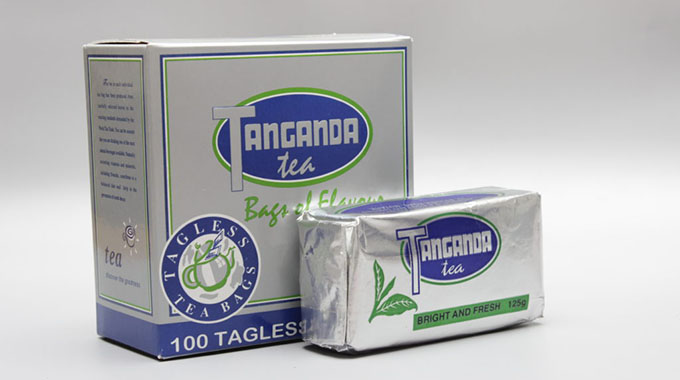
The beverage unit, which includes Tanganda’s packed tea brands, also recorded a decline, with sales volumes dipping 7 per cent to 1 610 tonnes. Management attributed the performance to macroeconomic volatility, supply chain constraints early in the year, and a shift in consumer spending patterns. The company, however, reported an improvement in the second half as packaging supply normalised and demand stabilised.
Mr Nkala said the group’s ongoing commitment to sustainable business practices continued uninterrupted despite the difficult environment. Tanganda expanded its certification portfolio relating to environmental stewardship, occupational health, and responsible agriculture.
“Sustainability is central to our long-term competitiveness,” he said. “We are embedding global best practices to ensure our products remain trusted across markets.”
The chairperson emphasised that the 2025-26 agricultural season carries cautious optimism. Meteorological data indicates improved rainfall from mid-November onward, with normal to above-normal precipitation expected through February 2026.
“Our estates are well prepared, and the early progress of the season is encouraging,” he said.
Management expects stable market conditions heading into the next year, anchored by easing inflation, exchange rate stability, and recently announced Government reforms aimed at improving the ease of doing business.
Tanganda is also prioritising improved yields through irrigation investments and process optimisation.
Packaging availability, which constrained tea volumes in early 2025, is no longer a concern, and the company anticipates sustained recovery of sales in both regional and international markets. The chairperson said the diversification strategy remains central to Tanganda’s resilience.
“We are repositioning the business to ensure we can absorb shocks from any single product line or market,” he said. “Our focus is on efficiency, value optimisation, and leveraging our multi-crop portfolio.”
The board did not declare a dividend, citing the year’s losses. Tanganda is, however, proceeding with capital raising initiatives, including a US$8 million Rights Offer designed to strengthen the balance sheet and support expansion.
He said shareholder interest had been strong. “This capital injection will enable the company to execute its growth strategy more effectively while safeguarding operational continuity.”
The group anticipates an improved financial performance in 2026 driven by better weather, stronger beverage sales, operational efficiencies, and a more stable macroeconomic environment. Mr Nkala concluded that while 2025 was exceptionally difficult, Tanganda enters the new year on firmer footing.
“Our plantations are recovering, demand trends are normalising, and our investment programme is aligned with long-term growth,” he said. “We expect the company to regain momentum as conditions stabilise.”-herald