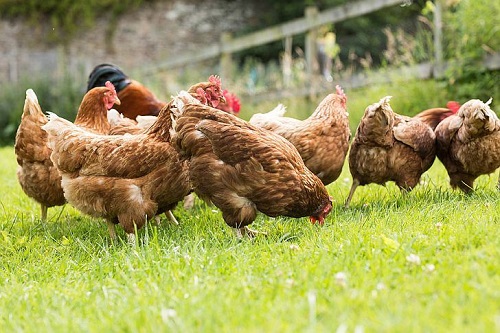
Zimbabwe’s indigenous chicken population valued at US$46,64 million underscores the significance of this sub-sector in supporting rural livelihoods, anchoring national food systems and generating income for millions of households across the country, a recent report shows.
The Ministry of Lands, Agriculture, Fisheries, Water, and Rural Development’s Agricultural Value Chains Analysis and Action Plan (2026-2030), as espoused in the Agriculture Food Systems and Rural Transformation Strategy 2, demonstrates the significant market potential of indigenous chickens, particularly for smallholder farmers who lead in indigenous poultry production.
“A market value of US$46,64 million for indigenous chickens reflects the economic importance of this sub-sector in rural livelihoods and food systems. It demonstrates significant income-generating potential, especially for smallholder farmers,” reads part of the document.
However, the sector experienced a temporary setback in 2024 due to climatic shocks.
“There was a 15 percent decrease in indigenous chicken production recorded in 2024. The population decreased from 21 394 764 in 2023 to 18 095 637 in 2024 due to the El Niño-induced slaughter.”
Despite this decline, the Government says measures are firmly in place to restore and scale up production through targeted support interventions being implemented under national poultry programmes.
“The Presidential Poultry Scheme will be key in the growth and commercialisation of the indigenous chicken sector during the implementation.
“The programme will see growth in the population of indigenous chickens as well as growth in meat and eggs from indigenous chickens. The growth projections must be supported with good poultry husbandry practices, especially disease control, as this is the major contributor of losses in the value chain.”
The initiative is one of the major pillars under livestock development strategies and is expected to drive the growth and commercialisation of indigenous poultry.
Indigenous chicks provide healthy and nutritious food for consumers while creating employment opportunities in the whole food chain.
Meanwhile, the report shows that Manicaland Province is ahead in indigenous chicken population, boasting the highest numbers among all provinces.
The province has about 3,642,030 birds, significantly ahead of the Midlands Province, which holds 3 035 733.
Indigenous chickens remain essential for food security, nutrition and income, especially in rural communities where free-range systems dominate.
With indigenous poultry playing an increasingly important role in rural development, the sector is poised for further expansion as the Government intensifies support for small livestock production under national agricultural transformation programmes.
The growing market value and steady provincial production levels show that indigenous chickens will remain integral to Zimbabwe’s rural economy and food systems for years to come.-herald