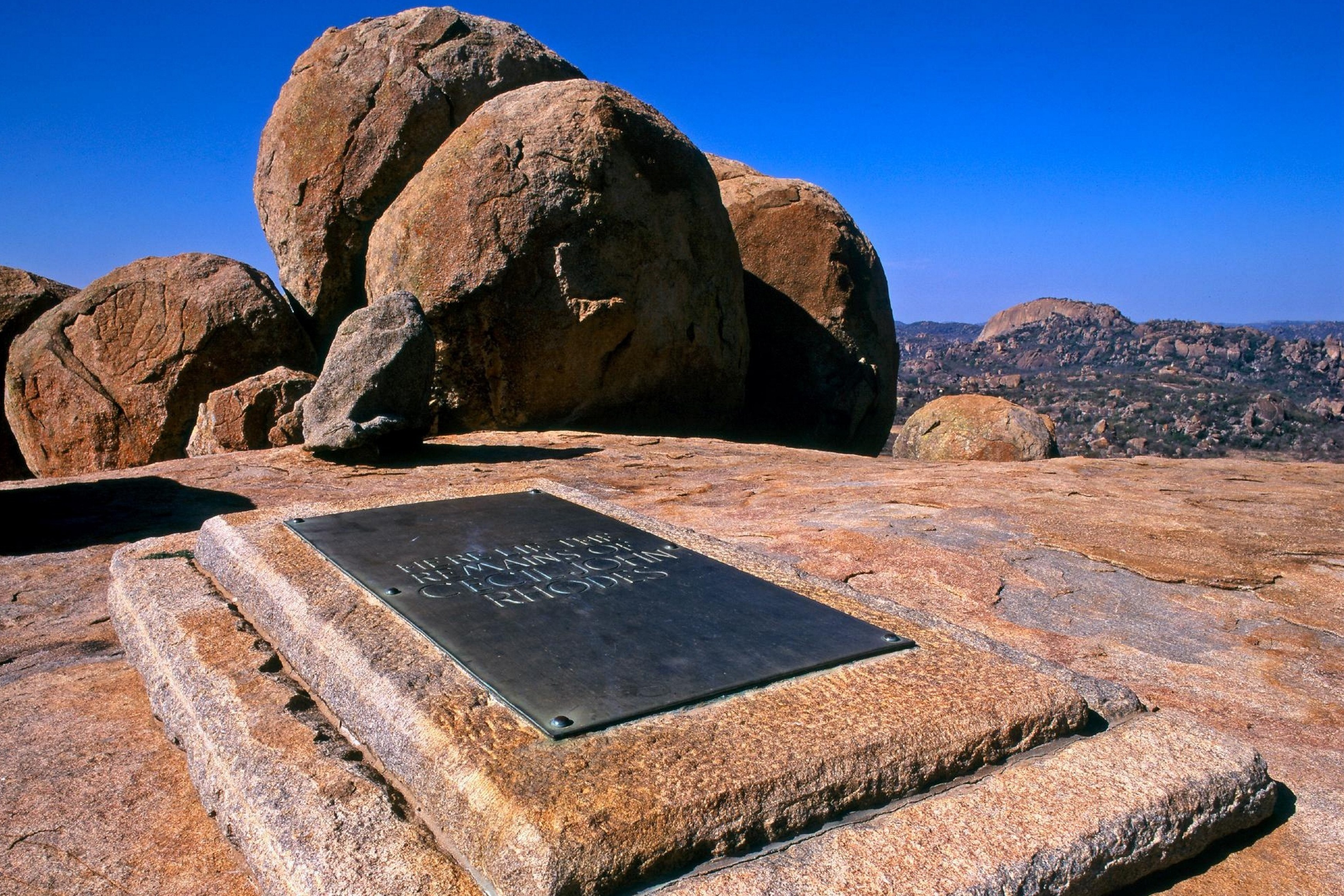
Just 15 kilometres from Njelele, atop a hill the local Kalanga people call Malindadzimu, meaning where the spirits rest, lies the grave of Cecil John Rhodes.
The British mining magnate and politician, who died in 1902, specifically requested burial at this location he termed World’s View. His choice was no accident, representing a deliberate assertion of colonial dominance over sacred African space that continues to reverberate more than a century later.
Cultural colonisation and brand distortion
The placement of Rhodes’ grave at this spiritually significant site exemplifies a profound form of cultural colonisation that extends beyond physical occupation into the spiritual realm.
By occupying a sacred indigenous site, the grave represents an aggressive challenge to African religion and a symbolic assertion of dominance that persists even in death. This enduring presence fundamentally distorts Zimbabwe’s cultural brand, creating a narrative contradiction that undermines efforts to present an authentic national identity rooted in indigenous heritage.
The grave attracts approximately 15 000 visitors annually, with foreign tourists paying US$15 to enter the national park and an additional US$10 to view the burial site. While this generates revenue and has provided economic opportunities for local vendors who have funded their children’s education through curio sales, this economic dependence creates a painful paradox: Zimbabwe’s tourism economy remains partially anchored to the commemoration of its own oppression.
The challenge of dual narratives
The proximity of Rhodes’ grave to Njelele has created profound challenges for authentic cultural tourism development. The juxtaposition forces an uncomfortable question: How can Zimbabwe genuinely promote its indigenous spiritual heritage while simultaneously marketing the grave of a coloniser who represents historical oppression?
This cultural collision produces brand confusion that weakens Zimbabwe’s ability to position itself as a destination for meaningful African heritage tourism.
The sacred Matobo Hills, with rock art dating back 13 000 years and spiritual significance that draws pilgrims from across the region, possess extraordinary potential for authentic cultural tourism. Yet this potential remains compromised by the continued prominence of colonial symbolism that overshadows indigenous narratives.
International visitors often arrive with greater knowledge of Rhodes than of the millennia-old spiritual traditions that define the landscape’s true significance.
The economic trap of colonial heritage
The debate over the grave has fractured communities, revealing the complex web of colonial legacy. While many view the grave as an affront to African spirituality and dignity, others point to its economic value. Residents who depend on tourism revenue fear that removing the remains would devastate their livelihoods.
This economic dependence on a colonial symbol creates a dependency trap that perpetuates the very power dynamics colonialism established.
Previous government positions have emphasised the grave’s revenue-generating capacity, suggesting that the coloniser continues to pay taxes through tourism even in death. The grave remains protected under the National Museums and Monuments Act, with no current Governmental inclination to revisit this status.
This protection of colonial heritage effectively prioritises economic expedience over cultural decolonisation and indigenous rights to sacred spaces.
Compounding threats to indigenous heritage
The challenges extend beyond symbolic presence. In June 2018, Njelele suffered a devastating attack when unknown perpetrators used mining explosives to blast the main rock covering the heritage site, destroy sacred pots, and loot traditional artefacts. This bombing shocked the nation and exposed the vulnerability of unprotected indigenous sacred sites.
Additionally, the site has experienced repeated unsanctioned visits by groups claiming to seek spiritual cleansing, including war veterans and members of apostolic sects.
These unauthorised intrusions violate strict traditional protocols governing access and are believed to disturb the peace of the heritage site and anger ancestral spirits. Such violations demonstrate the erosion of traditional authority and the disrespect for indigenous spiritual practices that colonial disruption initiated and that continues in post-colonial contexts.
Local communities have consistently resisted efforts to proclaim Njelele a national monument, fearing that official designation would lead to commercialisation, loss of traditional control, and the kind of tourism development that has transformed other heritage sites into spaces where locals must pay fees to access their own cultural heritage.
Protecting indigenous culture: The path forward
Zimbabwe’s cultural tourism sector requires fundamental reorientation to protect indigenous heritage and promote an authentic national brand. This transformation demands several strategic actions: Recentring African Narratives: Cultural tourism development must prioritise indigenous spiritual traditions and historical experiences over colonial commemoration. The Matobo Hills’ 13 000-year history of human habitation and spiritual practice should form the cornerstone of tourism marketing, not a footnote to colonial history.
Reframing colonial heritage: If Rhodes’ grave remains, it must be re-contextualised within a comprehensive historical interpretation that centres African experiences of colonialism rather than celebrating colonial conquest.
Interpretive materials should emphasise the violence, displacement, and cultural disruption that Rhodes’ legacy represents, transforming the site from a colonial monument to an educational resource about the costs of imperialism.
Strengthening traditional authority: Control of sacred sites must return to traditional custodians who can enforce protocols, prevent unauthorised access, and maintain the spiritual integrity of these spaces. Government protection should support rather than supplant traditional governance structures.
Enhanced site protection: The 2018 bombing demonstrates the urgent need for Government investment in protecting sacred sites. Better coordination between traditional authorities, local government, and cultural heritage agencies can prevent physical attacks and unauthorised intrusions.
Economic diversification: Communities must develop tourism revenue streams independent of colonial heritage. Investment in authentic cultural experiences, traditional ceremonies, guided heritage walks led by knowledge keepers, interpretive centres focused on indigenous history, and partnerships with regional pilgrimage networks can create sustainable livelihoods while reinforcing rather than contradicting Zimbabwe’s cultural brand.
National decolonisation framework: Zimbabwe requires a comprehensive policy framework for addressing colonial heritage that balances economic considerations with cultural integrity, human dignity, and the rights of indigenous communities to their sacred spaces.
Reclaiming cultural identity
The true cost of maintaining Rhodes’ grave at this sacred site extends beyond symbolism. It represents ongoing cultural colonisation that distorts Zimbabwe’s national brand, undermines indigenous spirituality, perpetuates economic dependency on colonial legacy, and signals that foreign narratives retain precedence over African heritage even in independent Zimbabwe.
Authentic cultural tourism development requires Zimbabwe to make difficult choices about which stories to privilege and whose heritage deserves prominence.
The resolution of this dilemma will shape not only the future of cultural tourism in the Matobo Hills but also Zimbabwe’s broader process of cultural decolonisation, national healing, and the construction of a post-colonial identity that honours indigenous heritage without compromise.
For now, pilgrims continue their annual journeys to Njelele, seeking blessings as their ancestors did for centuries. The sacred Matobo Hills await a future that can fully honour indigenous memory and truth, free from the shadow of colonial dominance, a future where Zimbabwe’s cultural brand authentically reflects the spiritual depth and historical richness of its own people rather than the legacy of those who sought to conquer them.
Charles Mavhunga co-authored textbooks in Business Entrepreneurial Skills and is currently studying for a Ph.D. in Management at Bindura University. He can be contacted at charles.mavhunga@ gmail.com./Cell: 0772989816-herald