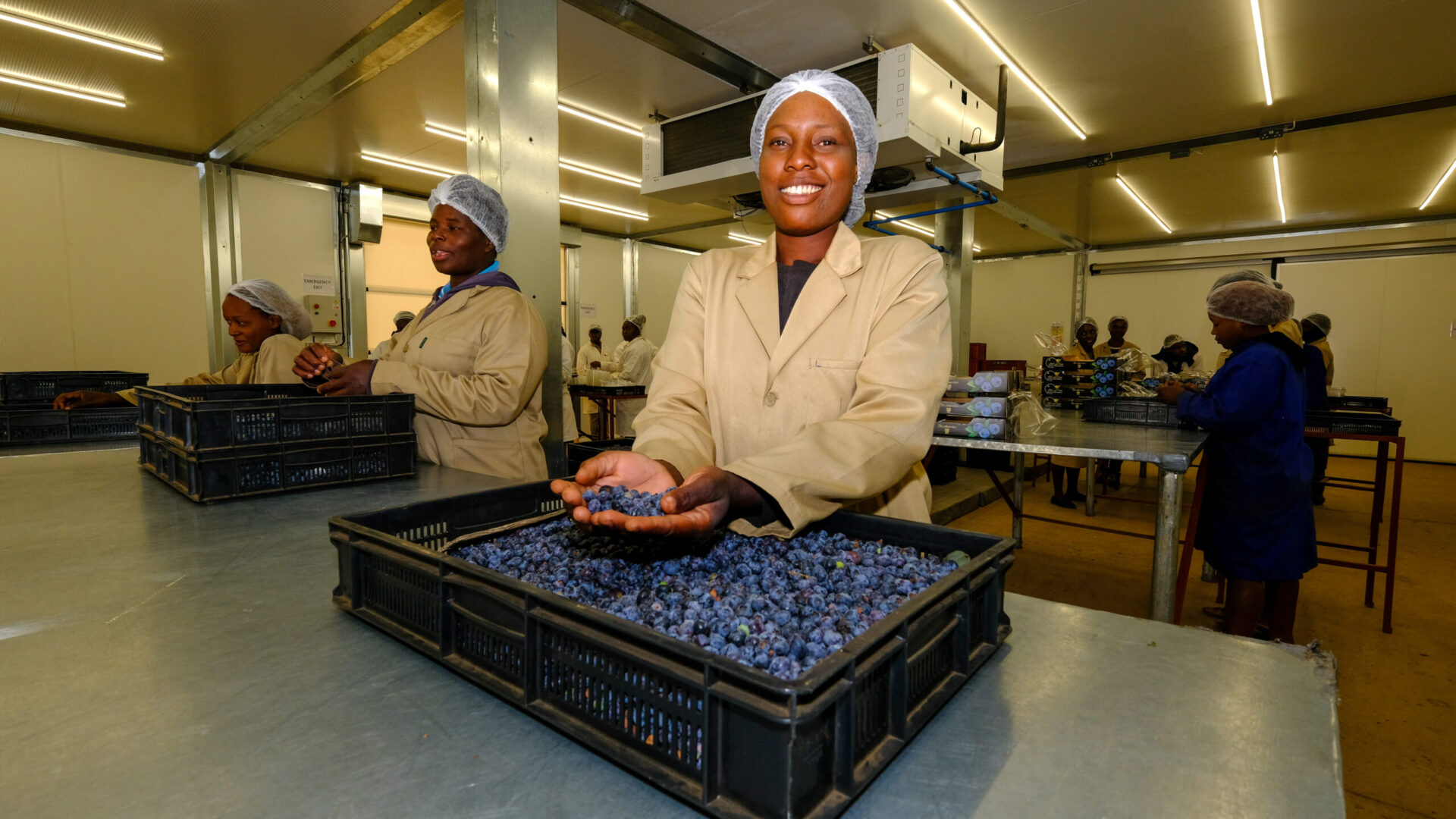
ZIMBABWE needs to expand its blueberry production area from the current 750 hectares if it is to satisfy the lucrative Chinese market and exploit short trade routes for profitability, the Horticultural Development Council has revealed.
The country recently signed a blueberry export protocol with China, which allows exporters to access the market subject to meeting the set sanitary and phytosanitary regulations.
This follows the signing of citrus and avocado protocols earlier on.
Speaking on the sidelines of the just-ended International Blueberry Organisation (IBO) Summit in South Africa, HDC chairman and blueberry farmer, Mr Alistair Campbell, said China presented a huge market with current local production and a drop in the ocean.
“Currently, blueberries are at 750ha, with marketing opening in China and India, our produce will be exposed to about three billion people.
“So, we need to upscale production to satisfy the niche market,” he said.
Mr Campbell said, although Zimbabwe had more ports of exit to use, such as Beira, Walvis Bay and Durban, currently its blueberries were being road-freighted to Cape Town port for shipment.
Increased production of horticulture products, coupled with the development of a cold chain, was necessary to lower port charges and logistical issues to warrant the use of shorter routes like Beira.
Zimbabwe started blueberry experiments around 2014/15, with commercial production starting in 2017.
The sector experienced a five-year phenomenal export earnings growth of 810 percent from US$1 million in 2018 to US$14 million in 2022 and growth continues to date.
Zimbabwe offers unique climatic conditions that give its berries a distinct advantage in size, flavour and texture.
This makes them popular in many markets around the world. Blueberries are rich in antioxidants. They are also low in calories and high in vitamins C and K, making them a key part of a healthy diet.
The country produces premium quality berries which are bigger, better and sweeter, its Unique Selling Point (USP).
USP is the distinct benefit that makes a product or service stand out from the competition.
Zimbabwe’s main blueberry harvest season runs from May to October.
“It has the longest harvesting period, starting from mid-March to the end of October, making it take advantage of different market segments to get the highest prices,” he said.
The country’s early harvested blueberries are sold in South Africa at high prices, while those harvested around May are exported to countries such as Hong Kong, Malaysia, Singapore and the Far East region.
The European market will be the main recipient from July, earlier, before the arch-rival Peru floods the market with its product.
HDC chief executive, Mrs Linda Nielsen, said Zimbabwe should start telling the world its good story now.
“Zimbabwe has the agricultural deoxyribonucleic acid (DNA) within itself and we are seeing traction of investments as a result of collaborations with the Government.
“The fiscal environment and ease of doing business reforms by the Government are attracting investors and we hope more Foreign Direct Investment (FDI) will come into the country,” she said.
Mrs Nielsen said sanitary and phytosanitary issues were not a challenge for producers to enter the Chinese market as they were compliant to more strict European union (EU) rules, but the challenge was the lack of cold-chain infrastructure at Beira port.
She said next season the country’s blueberries will enter the Chinese market.-herald