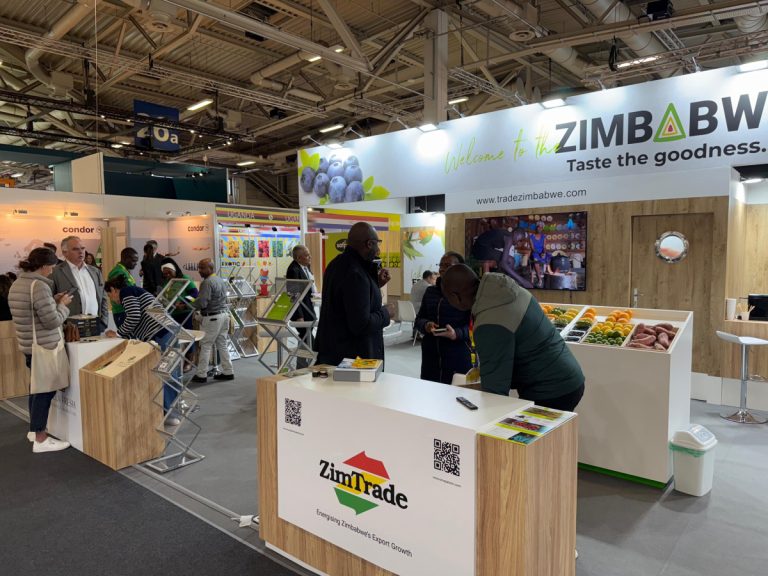
BUSINESSES in Manicaland have been challenged to expand their operations and export into new markets being scouted and created by the Government to boost foreign currency generation and increase employment.
This was said by ZimTrade eastern region manager, Mr Admire Jongwe this week while presenting the market scan findings in four countries – Uganda, Singapore, Mozambique and the United Kingdom’s cut flower market potential, which Zimbabwe used to dominate.
Mr Jongwe challenged farmers, producers, manufacturers and services providers to grab the opportunity as Zimbabwe’s products have a reputation globally for being of high quality.
“The market scans, whose findings we are presenting, provide practical insights into product demand trends, market requirements, distribution channels, pricing structures and competitor positioning. These findings are essential for guiding our export strategies towards market entry and expansion.
“Zimbabwe has the capacity (to increase exports), and the markets have the effective demand. What is needed is alignment of products, of quality, of market intelligence and of strategic partnerships. As ZimTrade, we are committed to converting this intelligence into market outcomes. We will work with our exporters to build capacity, refine product offerings, strengthen logistics linkages and facilitate connections with buyers, distributors and development partners in the United Kingdom, Singapore, Uganda and Mozambique,” he said.
He revealed that there is huge potential for trade between Uganda and Zimbabwe as the current levels are below US$1 million, yet there is high demand for products such as horticultural products, which are abundant in the province.
“Uganda’s economy is projected to grow by seven percent in the coming year. It is a COMESA member state, presenting trade opportunities for Zimbabwean products. Trade between Zimbabwe and Uganda is currently below US$1 million. Zimbabwe’s exports to Uganda include tobacco and citrus. The low trade reflects missed opportunities in products and services where Zimbabwe has comparative and competitive advantages to supply,” said Mr Jongwe.
Singapore imports horticultural products worth nearly US$2 billion, shipping in products such as coffee, onions, grapes, apples, blueberries, oranges and strawberries, which are all grown in the province.
“Singapore, an uncharted territory in our bilateral trade journey, holds immense potential as we pursue trade market diversification and new frontiers for export growth. Exports to Singapore have been growing from 2022, and in 2024, US$10m in exports were recorded. Singapore presents great potential due to its high demand for agricultural, artistic and fast-moving consumer goods, all of which Zimbabwe can offer competitively,” revealed Mr Jongwe.
He further said farmers must position themselves to recapture the United Kingdom cut flower market, which Zimbabwe used to dominate. He challenged businesses to increase exports into Mozambique, where Zimbabwean products are in high demand.
“For the UK, at our peak (2006), we exported cut flowers worth US$17,3m, showing potential that the sector has in the market. The market is one of the largest importers of cut flowers globally, accounting for 9,4 percent of world cut flower imports. To capitalise on this opportunity, our team participated in the Chelsea Flower Show and, in the process, gained valuable insights. Zimbabwean floriculture possesses immense potential.
“Mozambique, Zimbabwe’s fourth-largest trade partner, has seen trade engagements between the two nations reinforced by geographic proximity and the strategic utilization of Beira Port. Zimbabwe’s exports to Mozambique increased by 23 percent from US$397,7m in 2023 to US$487,6m in 2024. The positive trajectory underlines deepening trade ties between the two nations,” said Mr Jongwe.
Chairman for Macadamia Marketing and Production Cooperative, Mr Landelani Mapungwana said farmers and producers require support from both financial institutions and the government to start exporting into new identified markets.
“We have been given good insights into the markets of countries where we can push our products. The major issue we require to export into those countries is financing. We require funding from both the private sector and the government itself through packages that can be supervised by ZimTrade.
“Incentives are still needed for exporters, particularly first-timers and small-scale ones. Such incentives could be low collections of the retention threshold. This will result in abundant exports, which will create a high turnover for the country. The general loan requirements from local banks involve collateral, which may not always be available to small-scale producers. Conditions which are based on the viability of projects are better for us. Successful agriculture in any country requires Government support,” said Mr Mapungwana.-newsda
ZimTrade urges businesses to tap into new markets