Introduction
As the global nations vie for tourist arrivals and international acclaim, Zimbabwe stands at a pivotal crossroads: Can the country harness its architectural heritage as a compelling draw for global visitors? Increasingly, voices within Zimbabwe are championing a bold vision, one where the nation’s buildings become living testaments to its rich cultural legacy, captivating travellers with stories etched in stone, brick and various forms of design.
This approach, architectural and tourism experts argue, offers Zimbabwe a powerful opportunity: to set itself apart as a destination defined by authenticity and heritage, rather than blending into a backdrop of indistinguishable modern forms.
The celebration and elevation of Zimbabwe’s unique architectural identity may well become its most magnetic asset in the global tourism arena.
The power of architectural identity
Walk through Beijing, and the sweeping rooflines of traditional Chinese architecture greet you at every turn; from the Forbidden City’s ancient grandeur to contemporary structures that echo those distinctive upturned eaves.
Stroll through Moscow, and the colourful onion domes of Orthodox churches define the skyline alongside Soviet-era monumentalism. Visit Dubai, and Islamic geometric patterns merge seamlessly with futuristic glass towers, creating an unmistakable Arabian identity wrapped in 21st-century ambition.
These cities understand something fundamental: architecture is perhaps the most powerful form of national branding. It speaks before words are uttered, communicates across language barriers, and creates lasting impressions that no advertising campaign can match.
Yet for decades, many African nations, including Zimbabwe, have constructed buildings that could exist anywhere, glass boxes and concrete rectangles that might belong equally in Denver, Dubai, or Delhi. This architectural anonymity represents a missed opportunity of staggering proportions.
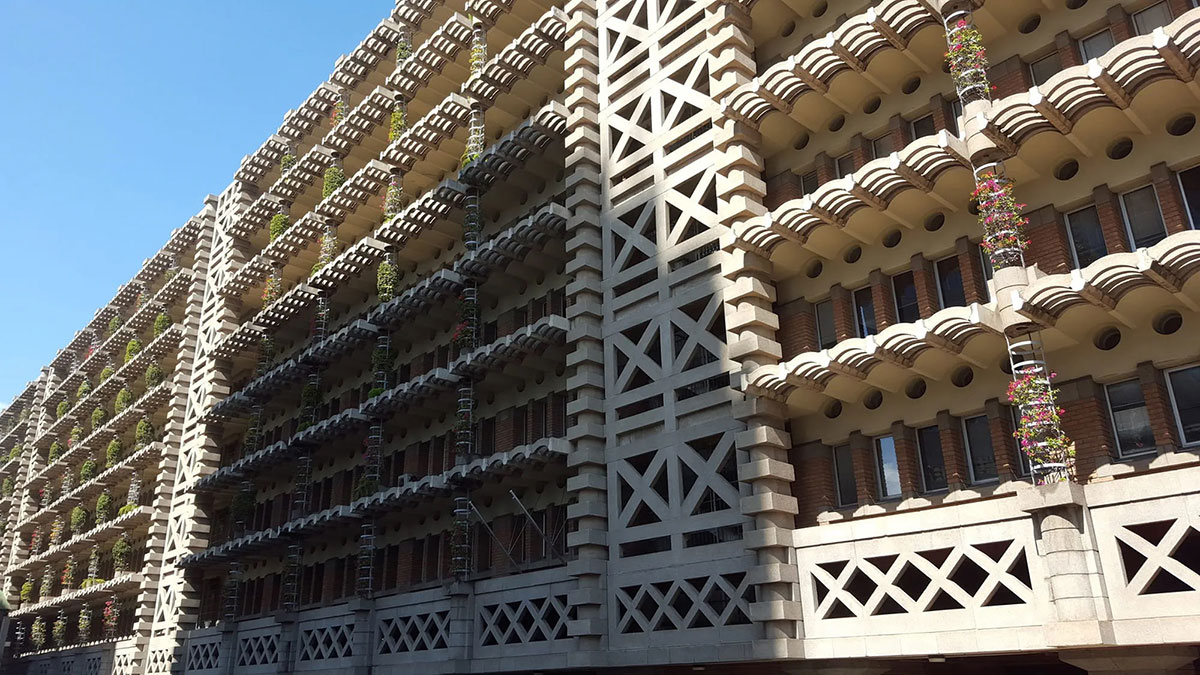
The Parliament building incorporates the iconic conical towers that made the Great Zimbabwe monument a UNESCO World Heritage Site
Zimbabwe’s awakening: The Parliament Building example
The tide, however, appears to be turning. Zimbabwe’s new Parliament building in Mount Hampden stands as a watershed moment in the nation’s architectural evolution. Rising majestically from the landscape, the structure incorporates the iconic conical towers that made the Great Zimbabwe monument a UNESCO World Heritage Site and gave the nation its very name.
These towers, built by the ancestors of modern Zimbabweans between the 11th and 15th centuries using sophisticated dry-stone masonry techniques, represent one of Africa’s greatest architectural achievements.
Their integration into contemporary parliamentary architecture sends an unmistakable message: Zimbabwe’s future is built upon the genius of its past.
The symbolism is powerful. Every visiting dignitary, every international journalist, every tourist who sees images of this building immediately connects Zimbabwe with its extraordinary heritage.
The Parliament building doesn’t just house lawmakers: it houses the nation’s identity.
Emerging patterns: Bindura and beyond
This architectural philosophy is spreading beyond the capital. At Bindura University of Science Education’s Mt Darwin Road Campus, the main entrance to the Innovation Hub features prominently displayed conical tower designs.
The gateway announces to students, visitors, and the broader community that this is a distinctly Zimbabwean space, where indigenous knowledge systems and modern innovation can coexist and cross-pollinate.
These examples represent more than aesthetic choices. They signal a maturation of national consciousness, a willingness to assert cultural identity in an increasingly homogenized global landscape.
They suggest that Zimbabwe is ready to compete not by imitating others, but by celebrating what makes it unique.
Global lessons in architectural branding
The international precedents are instructive. India has witnessed remarkable success with neo-Mughal and contemporary Hindu temple-inspired architecture, from Government buildings to five-star hotels. These structures instantly telegraph “India” to global audiences, supporting the nation`s tourism brand without a single word of marketing.
Morocco’s riads and geometric Islamic patterns have become so synonymous with luxury and exoticism that hotels worldwide attempt to replicate the aesthetic. The architecture itself has become a tourism product, driving millions of visitors to experience authentic Moroccan built environments.
Even relatively young nations understand this principle. Singapore’s Marina Bay Sands, while ultra-modern, incorporates feng shui principles and Asian design philosophies that root it firmly in place. The result is an instantly recognizable landmark that has become synonymous with the city-state itself.
Closer to home, Ethiopia’s rock-hewn churches of Lalibela inspire contemporary Ethiopian architecture, creating visual continuity between the nation’s ancient Christian heritage and its modern aspirations. This architectural honesty has made Ethiopia a priority destination for cultural tourists.
The path forward: A call to action
Revamp architectural education:
Training programmes must prioritise the study of Great Zimbabwe, Khami, Naletale, and other indigenous structures, treating them as living design languages relevant to modern needs.
Reform government procurement:
Policies should incentivize designs that incorporate distinctly Zimbabwean elements, ensuring public projects reflect national identity.
Encourage private sector adoption: Developers should be supported through tax breaks or faster approvals to embrace heritage-inspired architecture in their projects.
Require international hotel chains to localise: Hospitality brands operating in Zimbabwe should integrate local architectural features, as seen in countries like Morocco and Thailand.
Mobilise the construction sector: Architects, contractors, and planners must take the lead in transforming the built environment, using every new project as an opportunity to strengthen Zimbabwe’s visual brand.
Expand beyond conical towers: While the iconic conical towers of Great Zimbabwe are a starting point, the nation’s architectural vocabulary includes stone walling, traditional layouts, indigenous materials, and spatial relationships from local settlements.
Tourism’s architectural imperative
Tourism thrives on distinctiveness: Travellers are attracted to places that offer unique experiences, memorable spaces, and environments they cannot find at home.
Architectural uniqueness boosts tourism: A visually distinctive Zimbabwe can generate stunning photographs, inspire social media sharing, and create valuable word-of-mouth marketing.
National storytelling through architecture:
Envision major buildings, airport terminals, conference centres, hotels, and museums, each reflecting Zimbabwean design and collectively reinforcing the nation’s tourism narrative.
Embracing authentic modernity:
The goal is not to recreate theme parks but to develop a modern architectural language that honours Zimbabwe’s heritage while looking towards the future.
Building on existing foundations:
Landmarks like the Parliament building and Bindura University’s gateway demonstrate the potential, encouraging Zimbabwe to extend these examples nationwide.
Transforming the built environment:
Every new project should contribute to a cohesive, three-dimensional showcase of Zimbabwe’s rich heritage, creativity, and unique identity.
Architecture as a competitive advantage:
In the global race for tourism and investment, Zimbabwe’s architectural distinctiveness could be its strongest asset if the opportunity is seized rather than lost to generic designs.
Conclusion
Zimbabwe stands at a pivotal moment where every construction choice impacts its national identity. Through embracing heritage-inspired architecture, the nation harnesses economic growth, cultural pride, and a distinctive brand that resonates globally. Modern structures echoing Great Zimbabwe signal a renaissance, inviting the world to witness a unique legacy revived in stone, steel, and concrete. The vision and blueprint exist; what remains is unified action to ensure every new building contributes to this narrative.
Through reconnecting with its architectural roots, Zimbabwe can forge an identity that cannot be replicated, leaving future generations to judge its commitment and vision.
Charles Mavhunga co-authored textbooks in Business Entrepreneurial Skills and is currently studying for a Ph.D. in Management at Bindura University. He can be contacted at charles.mavhunga@ gmail.com .Cell:0772989816-herald