ZULU lithium developer, Premier African Minerals Limited, has urged shareholders to approve two critical resolutions at the forthcoming General Meeting, warning that failure to do so can jeopardise the company’s ability to continue operating as a going concern.
The AGM, scheduled for October 30, will deliberate on resolutions deemed vital to ensuring the company’s financial stability and operational continuity.
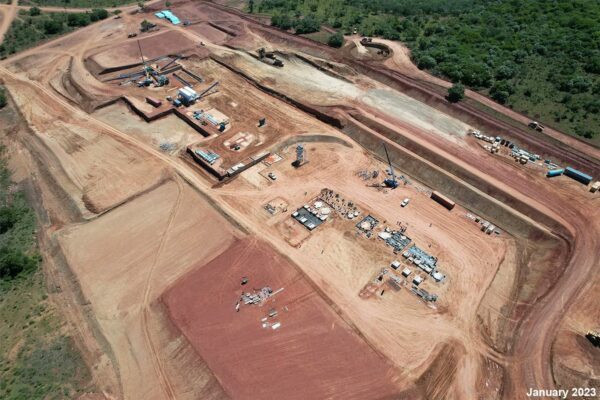
Premier operates the Zulu lithium plant in Fort Rixon, Matabeleland South Province.
The lithium developer needs fresh funding primarily to fund ongoing operational expenses at its Zulu lithium and tantalum project, which includes optimising the primary flotation plant and funding a potential alternative plant.
The capital is also needed for working capital, settling debt, and purchasing essential consumables to sustain operations while it concludes negotiations for a larger funding solution
In a notice to shareholders, managing director Mr Graham Hill stressed that the proposed special resolutions are essential for the company to raise capital and meet its financial obligations.
“Premier has limited funds and must secure additional financing arrangements to meet its payment commitments and obligations as they fall due,” said Mr Hill.
He cautioned that rejection of the special resolutions could have severe consequences for the company’s viability.
“If the special resolutions are not approved, a material uncertainty would arise which could cast significant doubt on the group’s ability to continue as a going concern and, consequently, on its ability to realise assets and settle liabilities in the normal course of business,” he said.
The first resolution seeks approval for the disapplication of pre-emption rights under the company’s articles of association for 24 months, allowing the board to issue or grant rights to subscribe for up to five billion ordinary shares.
The second resolution, which is conditional upon the first, proposes an additional one billion shares to be issued within 12 months, specifically to enable conversion of rights in favour of Canmax, as previously notified on December 24, 2024.
Mr Hill said the board “strongly encourages all members to vote on all the proposed resolutions,” noting that both measures were vital to maintaining financial flexibility.
“The board considers the approval of the Resolutions being proposed at this GM to be in the best interests of the Company and its Shareholders as a whole and, accordingly, unanimously recommends that Shareholders vote in favour of the Resolutions,” he said.
The company also warned that if the resolutions are not passed, it might be forced to pursue alternative funding routes such as a discounted open offer to shareholders, which carries significant uncertainty.
“There can be no assurance that such an open offer would be fully taken up or that other funding arrangements could be secured within the required timeframe and on acceptable terms,” Premier said.
Failure to secure the required funding, the company added, could “have a material adverse effect on both Zulu Lithium and the financial position of the Company as a whole.”
Mr Hill thus stressed, “For these reasons, the board considers it of the utmost importance that shareholders vote in favour of the resolutions.”
Providing an operational update, Mr Hill said the Zulu Lithium Project had been structured into five phases, with the fifth, Pre-production Readiness, being the most critical.
“The proposed pre-production readiness phase is potentially the final stepping point and a critical pivot to ensuring that the first four phases of commitment, development planning, operational running, and results analysis are fully realised and most importantly commercialised at Zulu Lithium,” he said.
This phase is expected to pave the way for further investment and structured agreements with potential partners.
“This is expected to support advancement towards a further investment and/or a structured agreement in accordance with a non-binding letter of interest entered into with the large trading house as announced on April 23, 2025, or such other investors on or before December 31, 2025,” he added.
To achieve the objectives of this phase, the company anticipates operating the plant continuously for up to 30 days, supported by adequate equipment, spare parts, and extensive maintenance based on prior performance analysis.
Building on the success of phases one and two, the flotation plant will now be supplied with sufficient material to produce saleable spodumene concentrate at the required grade, marking the closure of the current phase.
“This pre-production readiness phase will position the company to transition into phase six, being full-scale production, scheduled under future development planning with potential investors, including the Large Trader,” said Mr Hill.
He added that the company is also progressing negotiations for the acquisition of a secondary, conventional plant, viewed as complementary to the existing Enprotec Plant.
On funding, Mr Hill underscored the urgency of shareholder approval to enable the process.
“It is essential that the Company seek further approval for the disapplication of such a number of shares to allow the Company to proceed with Phase 5 ‘Pre-production Readiness’ and to also meet certain immediately due payments,” he said.
Premier, a UK-based mining and exploration company, has faced challenges with commissioning the lithium flotation circuit at its Zulu plant.
It has missed several delivery deadlines and, at one point, issued a force majeure notice to China’s Canmax Technologies, citing unforeseen operational hurdles encountered at the lithium plant in Fort Rixon.
Force majeure, a French term, is a common clause in contracts that essentially frees both parties from liability or obligation when an extraordinary event or circumstance beyond the control of the parties occurs.
The plant was reported to be unable to produce sufficient spodumene to meet the quantities required under the off-take agreement with Canmax.
Canmax wanted to terminate the agreement, a development that could have negatively affected the Zulu Lithium project.
However, after extensive discussions, the companies managed to restore their partnership.-herald