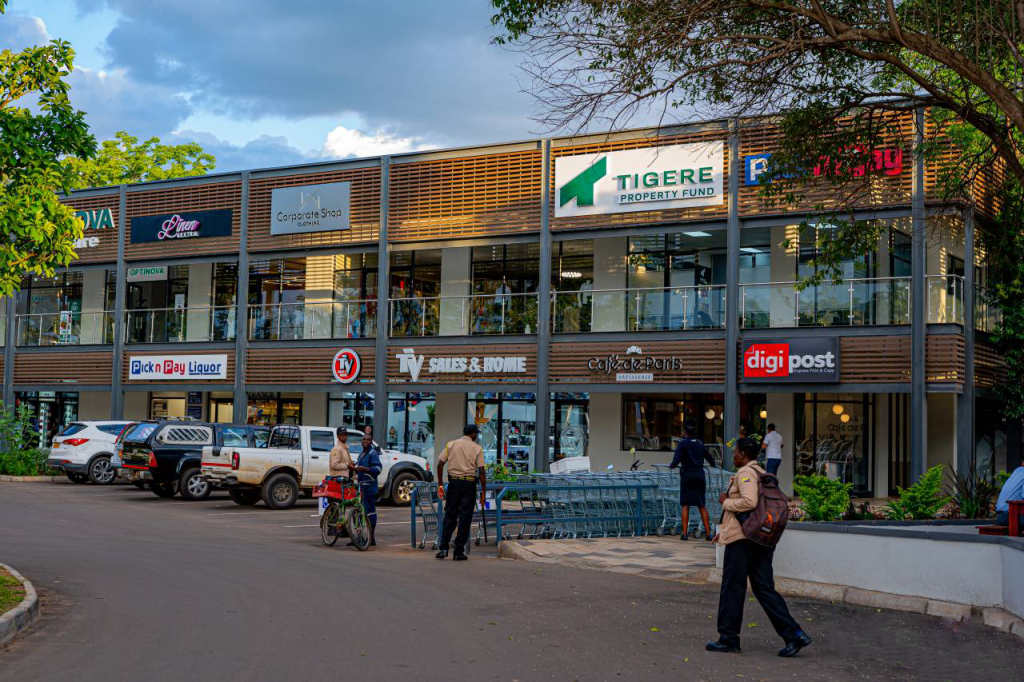

Drive through Harare today and it is difficult not to notice the changing landscape.
New shopping centres, offices, hotels and residential developments are transforming parts of the city. Highland Park along ED Mnangagwa Way, Madokero Mall in western Harare and the redevelopment of Sam Levy’s Village in Borrowdale are familiar examples.
Beyond the capital, the proposed shopping complex at the Zimbabwe International Trade Fair grounds in Bulawayo and hospitality investments such as the Palm River Hotel in Victoria Falls point to a wider story.
These developments are more than concrete and steel. Behind each one are investors and entrepreneurs who identified an opportunity, raised capital and accepted risks in anticipation of future returns.
What gave them the confidence?
Today’s Buildings Were Yesterday’s Decisions
Major investments do not happen overnight. A shopping mall, hotel or factory can take years to move from an idea to an operating business. Investors must assess demand, prepare feasibility studies, secure funding, obtain planning approvals, construct facilities and find customers or tenants.
An attractive opportunity alone does not guarantee investment. Entrepreneurs generally commit their money when they believe they can plan costs, manage risks and earn a reasonable return.
The buildings we see today, therefore, reflect decisions made years earlier, not simply the conditions prevailing at their opening.
Highland Park began construction in 2021 and opened its first phase in 2022. Madokero Mall opened its first phase in 2022 and subsequently expanded. Construction of the Palm River Hotel in Victoria Falls began in 2019, before it opened in 2021. Each illustrates the time separating investment decisions from visible results.
Since 2017, Zimbabwe has undergone major economic and policy changes. While currency instability remained a challenge, the use of US dollars and multicurrency arrangements gave some businesses a means of planning investments and revenues with greater predictability.
This was particularly important for projects whose financing, construction costs and future earnings could be structured in foreign currency.
Why Currency Stability Matters
Consider an entrepreneur planning a shopping centre over three years. Construction costs must be estimated, financing arranged and future rental income projected. If the value of money or input costs changes sharply, the original financial assumptions may no longer hold.
The same challenge faces a manufacturer importing machinery or a hotel operator planning an expansion.
Stability does not remove commercial risk. Demand can disappoint, financing can be expensive and projects can be delayed.
However, a more predictable currency and policy environment allows investors to make informed decisions and commit capital over longer periods.
Zimbabwe’s multicurrency system has, therefore, been important for many investors, while the more recent moderation in domestic-currency inflation and relative exchange-rate stability offer an opportunity to strengthen confidence across the economy.
Developments completed today cannot all be credited to recent monetary measures, but sustained stability can influence the projects that begin tomorrow.
Recognising the Contribution of Economic Policy
Monetary measures introduced in late 2024 were followed by improved exchange-rate stability and lower domestic-currency inflation.
This highlights the importance of the Ministry of Finance and the Reserve Bank of Zimbabwe in pursuing fiscal and monetary discipline.
Their continuing task is to preserve predictability. Investors also respond to market opportunities, foreign-currency earnings, entrepreneurship and access to capital.
Sound economic management can help these factors translate into sustained investment and economic growth.
From Concrete to Commerce
The value of development extends beyond construction. Building projects create demand for cement, steel, transport, engineering and labour.
Once operational, shopping centres support retailers and restaurants; hotels support tourism and conferencing; factories create production capacity; and housing developments attract services and new businesses.
Madokero Mall illustrates how commercial property can provide trading space, generate rental income and serve surrounding communities. The proposed ZITF retail development could create year-round commercial activity in a precinct associated with exhibitions.
Similarly, hospitality investment in Victoria Falls supports employment and wider tourism supply chains.
Yet buildings should not be mistaken for economic success in themselves. The lasting test is whether they attract customers, operate sustainably, create jobs and generate returns.
A completed building represents capital invested; a thriving enterprise represents capital put to productive use.
Sustaining the Confidence to Invest
Today’s investment decisions will shape Zimbabwe five or ten years from now. Entrepreneurs committing money to factories, hotels or commercial property are judging not only present opportunities but the environment in which they expect to operate for years.
Continued fiscal discipline, credible monetary policy, reliable infrastructure, efficient investment approvals and access to suitable financing will help sustain that confidence.
The benefits must also reach manufacturers, farmers and smaller enterprises, not only large property developments.
For the Ministry of Finance and the Reserve Bank of Zimbabwe, the opportunity is to consolidate recent gains in stability and strengthen confidence in the economy.
For investors and entrepreneurs, the opportunity is to translate that confidence into productive investments, business expansion and employment creation. Zimbabwe’s changing skyline is encouraging, but its deeper significance lies in the economic activity behind and within the buildings.
The concrete we see today represents investment decisions made yesterday. The commerce it generates will help shape Zimbabwe’s economy tomorrow.
Behind both lies an essential ingredient: the confidence to invest in the country’s future.
Dr Jabulani Dhlamini is a Strategy and Real Estate Advisor. Email: dhlamini.jabulani@gmail.com-heral