Markets do not thrive where guns roar and tourists do not visit where peace fails. In tourism, peace is the product. No one books a honeymoon in a war zone and no family plans a safari through uncertainty.
As President Emmerson Mnangagwa takes up the chairmanship of COMESA, he brings to the table a currency more valuable than dollars: peace and stability as a destination brand.
The timing matters. According to the International Monetary Fund’s October 2026 World Economic Outlook, Zimbabwe’s nominal GDP is projected to reach US$65,92 billion by the end of 2026, making it Africa’s 14th-largest economy.
An economy of this size, growing in a calm political climate, tells investors and travellers alike that Zimbabwe is open for business and open for visitors.
Why the chairmanship is strategic
COMESA spans twenty-one member states and hundreds of millions of people, forming one of Africa’s largest trading blocs.
Chairing places Zimbabwe at the centre of regional conversation. The chairman holds the instruments of convening power: setting agendas, hosting summits, shaping communiqués and opening doors.
Used well, these instruments can carry Zimbabwe’s tourism story to every capital in the bloc.
A destination brand is built on trust, and trust is built on credibility at the highest level. When a Head of State presides over regional integration, the nation he represents is reframed from a country that is spoken about to a country that speaks.
That shift is the foundation of any successful tourism brand.
The Rwanda lesson
Consider Rwanda’s Remarkable Rwanda brand. Born from the ashes of genocide, it was built deliberately on peace, order, cleanliness and security.
Rwanda understood that visitors buy safety before they buy scenery. Today it commands premium gorilla permits and hosts global conferences, all on the strength of a reputation for order.
Zimbabwe is writing a similar story, from its own circumstances.
It has survived years of sanctions without descending into chaos. Its elections have been held without the violence that scars other regions. Its streets are safe to walk, its people welcoming to strangers. This is the brand President Mnangagwa exports to COMESA: Safe Africa, Visit Africa.
A heritage that sells itself
Peace is the foundation, but Zimbabwe’s heritage is the architecture built upon it. Great Zimbabwe, the stone city that gave the nation its name, stands as proof of African ingenuity centuries before colonial narratives tried to erase it.
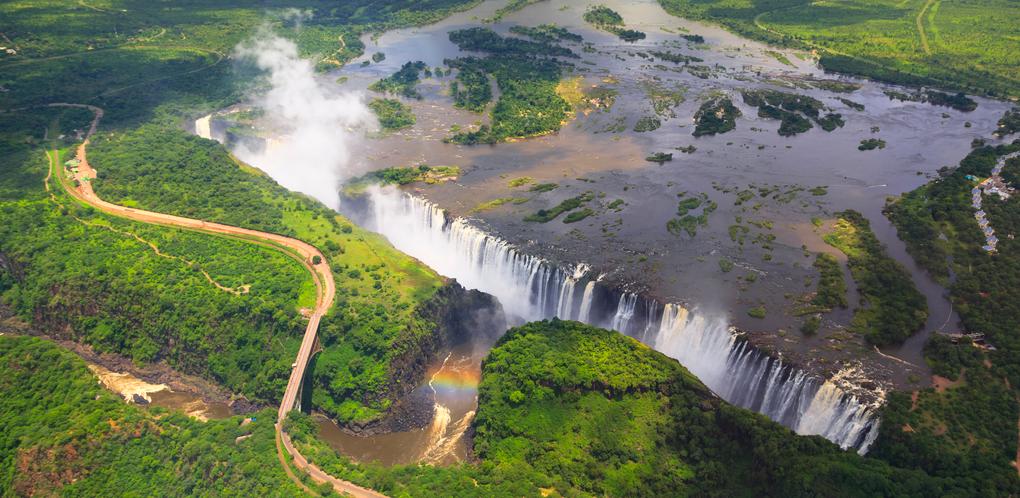
Victoria Falls, Mosi-oa-Tunya, the smoke that thunders, is among the great natural wonders of the world. Matobo’s granite hills, Hwange’s elephants, Mana Pools’ wilderness and the Eastern Highlands complete a portfolio few countries can match.
Yet landscapes alone do not create loyalty. People return to places where they were treated as human beings.
Ubuntu, hunhu and tsika nemagariro
Here Zimbabwe holds its deepest advantage. The philosophy of Ubuntu, expressed in Shona as hunhu and in isiNdebele as ubuntu, teaches that I am because we are.
Umuntu ngumuntu ngabantu; munhu munhu navanhu. A person is a person through other people.
This is not a slogan manufactured for brochures. It is lived hospitality, and it is what the visitor feels when a stranger is greeted as family.
Shona tsika nemagariro, the customs and ways of living, give this philosophy daily shape: respectful greeting, shared meals, reverence for elders, the principle of kuombera, of honouring one another. Ndebele tradition carries the same spirit through inhlonipho, deep respect, and through its rich practices of song, dance, beadwork and storytelling.
Together, Shona and Ndebele values present a unified national character: peaceful, dignified and generous. A brand rooted in genuine culture cannot be copied by competitors, because culture cannot be manufactured.
The global and regional picture
Globally, travellers increasingly seek authenticity, safety and meaningful connection over luxury alone. Regionally, intra-African tourism remains underdeveloped, held back by visa barriers, weak air links and fragmented marketing. Here the COMESA chairmanship becomes practical.
Visa facilitation, joint tourism corridors such as KAZA, harmonised standards and shared promotion can convert goodwill into arrivals. A regional visitor who experiences Zimbabwe’s peace becomes its most persuasive ambassador.
Conclusion
Branding begins with truth. Zimbabwe’s truth is stability, heritage and Ubuntu. With the chairmanship of COMESA, President Mnangagwa holds both the platform and the credibility to project that truth across Africa and the world. He is the Peace-Man whose calm assures the visitor, and the Market-Man whose agenda opens the borders.
The task now is to align policy, promotion and people behind one promise: Zimbabwe, a land of peace, where you arrive as a guest and leave as family. Safe Africa, Visit Africa.
Charles Mavhunga is a Zimbabwean scholar, author, and cultural ambassador pursuing a PhD in Management at Bindura University of Science Education.
He is the author of Mbira Virtuosos: Stories of Zimbabwean Mbira Legends (available on Amazon) and co-author of Business Enterprising Skills (Forms 1–4), published by Gramsol Books, Harare and approved by Zimbabwe’s Ministry of Primary and Secondary Education. A recognised Global Cultural Ambassador and member of the Council for the Development of Social Science Research in Africa (CODESRIA), he contributes weekly to The Herald, where he has published over 300 articles on tourism branding. He can be reached at charles.mavhunga@ gmail.com or +263 772 989 816.-herald